The Story of Giratina
On the reverse side of the Pokémon world, something watches.
Giratina has spent generations associated with a place unlike the world inhabited by most Pokémon. A dimension where ordinary knowledge becomes distorted and strange.
It does not simply visit this place.
It was banished there.
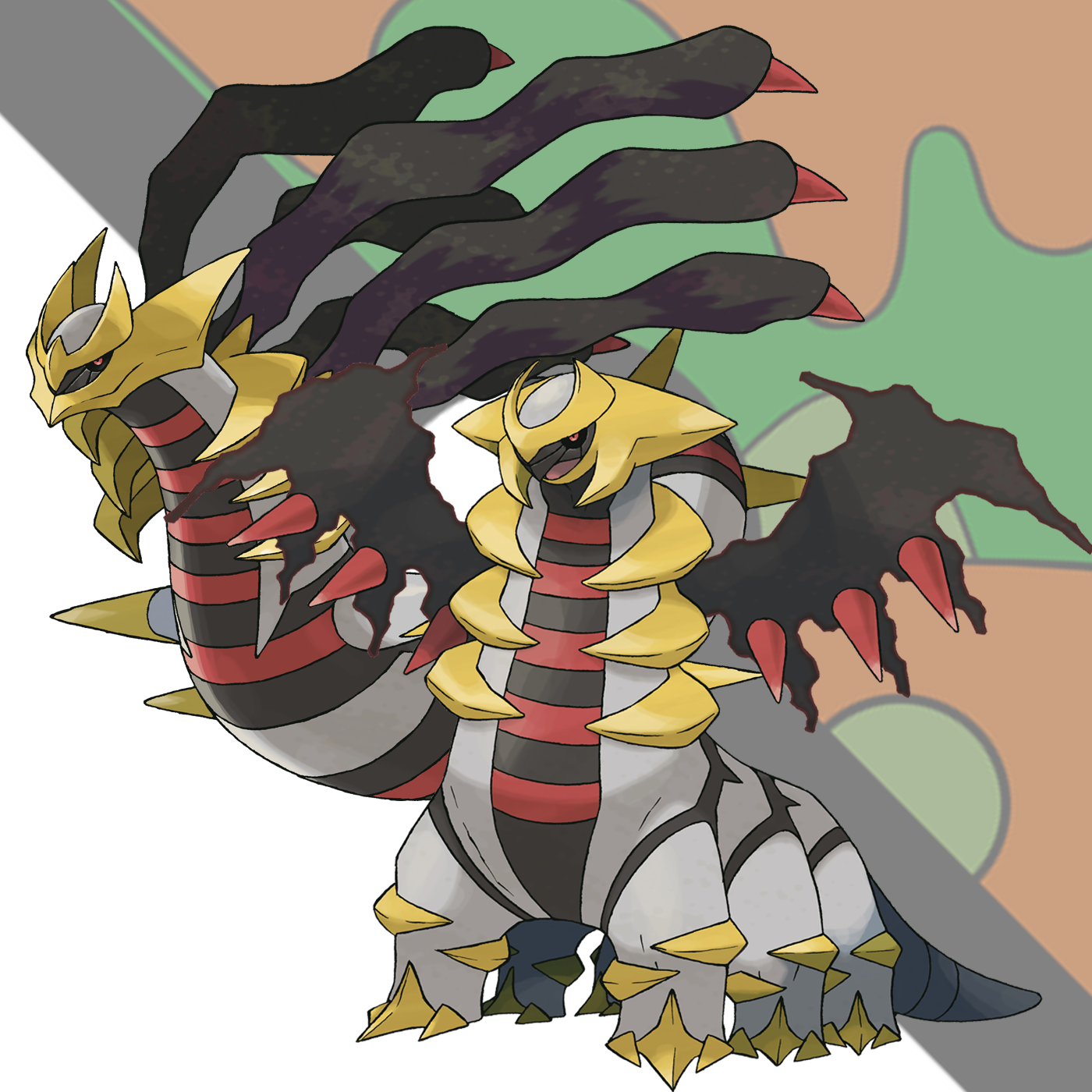
According to the myths of Sinnoh and Hisui, Arceus created Giratina alongside Dialga and Palkia near the beginning of existence. But Giratina's violent nature eventually led Arceus to exile it to the Distortion World. From there, Giratina silently watched the world it had been removed from.
Giratina - Altered Forme

"It was banished for its violence. It silently gazed upon the old world from the Distortion World."
—Pokémon Platinum
There is an important detail in that story.
Giratina wasn't simply misunderstood.
It wasn't banished for something it never did.
Its own behavior contributed to what happened.
Giratina did not immediately respond by becoming better.
It developed a grudge against Arceus.
It eventually joined Volo in opposing its creator.
Yet Giratina's story still did not end there.
After being defeated, something changed.
Later, when another person threatened the universe through ambitions similar to those Giratina had once supported, Giratina stood against him instead.
That might be the most important part of Giratina's story.
It could not erase what it had done.
It could only decide what it would do when another choice arrived.
Which raises a difficult question for us.
What happens when we are forced to confront a version of ourselves, we are no longer proud of?
Giratina used Pain Split
Redemption stories are easier when we can convince ourselves the person never really did anything wrong.
Maybe everyone misunderstood them.
Maybe circumstances were unfair.
Maybe someone else was actually responsible.
Giratina doesn't give us that escape.
Its violent behavior had consequences.
That matters because accountability loses its meaning if we only practice it when we're innocent.
Sometimes we really do make the wrong choice.
We hurt somebody because facing their feelings makes us uncomfortable.
We refuse to communicate because silence feels easier.
We act selfishly.
Then something ends whether it's a relationship, a job, or an opportunity.
Once the consequence arrives, we have another choice.
We can ask, "What did I do that contributed to this?"
Or we can build an explanation that keeps us from having to look too closely.
I know what the second option feels like.
Years ago, I met a woman.
We talked regularly and developed a strong connection.
She seemed like the kind of woman I told myself I wanted.
But when I actually received the attention that came with that connection, I didn't handle it well.
Sometimes I found her attention annoying.
I wouldn't respond to messages.
I became inconsistent.
I sent mixed signals because I wanted the connection without always wanting the responsibility that came with maintaining it.
When she became frustrated, I avoided those emotions too.
I was young.
I wasn't good at communicating.
Instead of maturely saying that I wasn't ready for what the relationship was becoming, I allowed uncertainty to do the talking for me.
Eventually, she became tired of it.
She blocked me and I was hurt.
Part of me still wanted her.
But wanting someone and being prepared to love them well are not necessarily the same thing.
Looking back, I can admit something now that was much harder to accept then.
I wanted the idea of a relationship more than I was prepared for the responsibility of one.
That doesn't make me evil.
It does mean my choices had consequences.
Just like Giratina, the next question became what I was going to do with them.
Giratina used Ancient Power
After Giratina's banishment, it developed a strong grudge against Arceus. Eventually, that resentment brought it into conflict with its creator again alongside Volo.
The consequence didn't immediately create reflection.
It created bitterness.
We do something similar.
When that connection ended, I had explanations for why relationships were difficult for me.
My parents had never modeled the kind of affection I thought relationships were supposed to contain.
They weren't married.
I didn't grow up watching them hug or kiss.
I didn't hear them tell each other, “I love you.”
So part of me concluded that I simply didn't know how relationships worked because nobody had shown me.
There was truth in that.
Role models matter.
What we witness growing up can affect what feels normal later.
But eventually an explanation can quietly become an excuse.
Instead of saying: "I didn't have good examples, so I have things I need to learn,"
I could tell myself: "I didn't have good examples, so this is simply how I am."
I also started believing something even more painful.
Maybe I was too difficult to love.
Maybe relationships simply weren't meant for me.
That explanation protected me from something uncomfortable.
If I was fundamentally unlovable, then I didn't have to examine the ways I was sometimes pushing love away myself.
Giratina is exerting its Pressure!
One of Giratina's abilities is Pressure, which causes opponents to expend additional effort when using moves against it.
Emotionally, Giratina carries plenty of pressure of its own.
Its history follows it.
History of banishment, violence, resentment, opposition to Arceus.
Sometimes our past creates that kind of weight too.
A new relationship isn't just a new relationship anymore.
It carries the memory of everyone who left before.
A new workplace contains the memory of the employer who mistreated us.
A disagreement contains echoes of an argument from years ago.
And a mistake can become evidence in a case we've been building against ourselves.
"See? You always ruin things."
"See? You aren't relationship material."
"See? Everyone else figured life out except you."
When we carry enough history into the present, an ordinary moment can begin feeling much heavier than it actually is.
Giratina's Pokédex repeatedly describes it as silently gazing upon the old world from the Distortion World.
That image resonates with another part of my life.
For years, I watched friends get married.
Living in Texas, many of the church environments I participated in placed significant emphasis on marriage and family.
People often married young.
Once they did, the community around them changed.
Small groups that once included everyone slowly disappeared.
People moved into married groups.
Couples built lives with other couples.
If you remained single long enough, it sometimes felt like everyone else had advanced to the next stage while nobody had given you a map for what your stage was supposed to look like.
I was told church community mattered.
But as an older single adult, I often felt as though the culture had room for a version of me that didn't exist yet.
The husband, the family man, the person entering the stage everyone seemed to expect.
But what about the person I actually was?
Sometimes it felt like standing on the reverse side of the world.
Close enough to see everyone moving.
Far enough away to wonder where I belonged.
Being outside can change the story we tell ourselves.
Maybe everyone else belongs.
Maybe something is wrong with me.
Maybe I missed my chance.
Maybe the world was designed for people who figured this out earlier.
Those thoughts can become their own Distortion World.
Common knowledge starts bending.
One difficult experience becomes, "Nobody wants me."
One rejection becomes, "I will always be alone."
One failure becomes, "I am a failure."
The facts haven't necessarily changed.
Our perception has.
That is why Giratina's resentment matters.
Being banished was an event.
Living as the banished one became an identity.
There is a difference.
We can experience rejection without becoming rejection.
We can fail without becoming failure.
We can lose a relationship without deciding we are incapable of love.
We can make a mistake without allowing that mistake to become our permanent name.
Eventually, my relationship with church culture reached a breaking point.
During one of the darkest periods of my life, I reached out while struggling with suicidal thoughts.
The response I needed never came.
Eventually, I decided I needed to step away.
At the time, leaving could have looked like another failure.
Another community I hadn't managed to fit into.
Another place where everyone else seemed to understand the rules while I remained somewhere outside them.
Instead, leaving began forcing me to confront something I had spent much of my life asking other people to provide.
Self-worth.
I wanted people to love me. accept me, choose me.
Make me feel like my life mattered.
There is nothing wrong with wanting those things.
Human beings need connection.
But nobody else could permanently supply the belief that my life was worth something if I refused to believe it myself.
I had to build connections that didn't require me to become a version of myself designed around somebody else's expectations.
More importantly, I had to begin accepting the person already standing there.
Flaws and all.
That is still difficult.
But difficulty does not make the work optional.
Giratina - Origin Forme

“Giratina loses its legs upon changing into this form. I believe this Pokémon must hail from a world where the heavens and the earth are as one, though I have no way of proving it.”
—Pokémon Legends: Arceus
Giratina has another form.
Its Origin Forme is described as its true form.
Yet strangely, Giratina naturally assumes that form in the Distortion World, the very place associated with its banishment. There, Giratina reaches its full power and can travel through and exert control over dimensions beyond time and space. Outside that environment, differences in gravity normally force it into its Altered Forme unless something helps it maintain its original shape.
There is something remarkable about that.
Giratina was sent somewhere as punishment.
Yet that place eventually became the environment where its natural form could fully exist.
That doesn't mean the banishment was secretly good.
It doesn't mean everything painful happens for a reason.
Sometimes painful things are simply painful.
But we still get to decide what grows afterward.
Stepping away from environments where I struggled to belong forced me to ask questions I might have avoided if everything had remained comfortable.
Who am I when I'm not trying to fit someone else's timeline?
What do I actually value?
What relationships do I want?
What kind of man do I want to become?
What does love look like when it isn't a performance?
Sometimes the chapter we never wanted becomes the place where we finally encounter ourselves without the audience we were trying to satisfy.
Giratina's resentment didn't disappear quickly.
It later opposed Arceus alongside Volo.
That matters because growth is rarely a straight line.
Recognizing a problem doesn't immediately eliminate it.
Someone realizes they're a people-pleaser.
Then catches themselves people-pleasing again.
Someone recognizes they avoid conflict.
Then avoids the next difficult conversation.
Someone realizes they fear intimacy.
Then starts pulling away when another relationship becomes serious.
We often imagine growth as:
I understood the lesson, so I stopped making the mistake.
Real life is messier.
Sometimes we need to encounter the pattern again.
Sometimes we fail again.
Sometimes we need to fail again.
What matters is whether repetition eventually creates recognition.
Giratina and Volo are ultimately defeated.
Afterward, Giratina changes its ways.
Defeat usually sounds negative.
But sometimes losing removes our ability to continue lying to ourselves.
A relationship ends.
Someone stops tolerating our behavior.
A job fires us.
Suddenly, explanations aren't enough.
We have to decide whether to keep blaming the world or examine the pattern.
The woman I met years ago blocking me hurt.
But looking back, I understand why she did it.
She eventually stopped accepting uncertainty from someone unwilling to communicate honestly.
The ending didn't prove I was impossible to love.
It showed me I wasn't ready to participate in love the way I claimed I wanted to.
Those are very different conclusions.
One creates shame.
The other creates responsibility.
Giratina used Destiny Bond
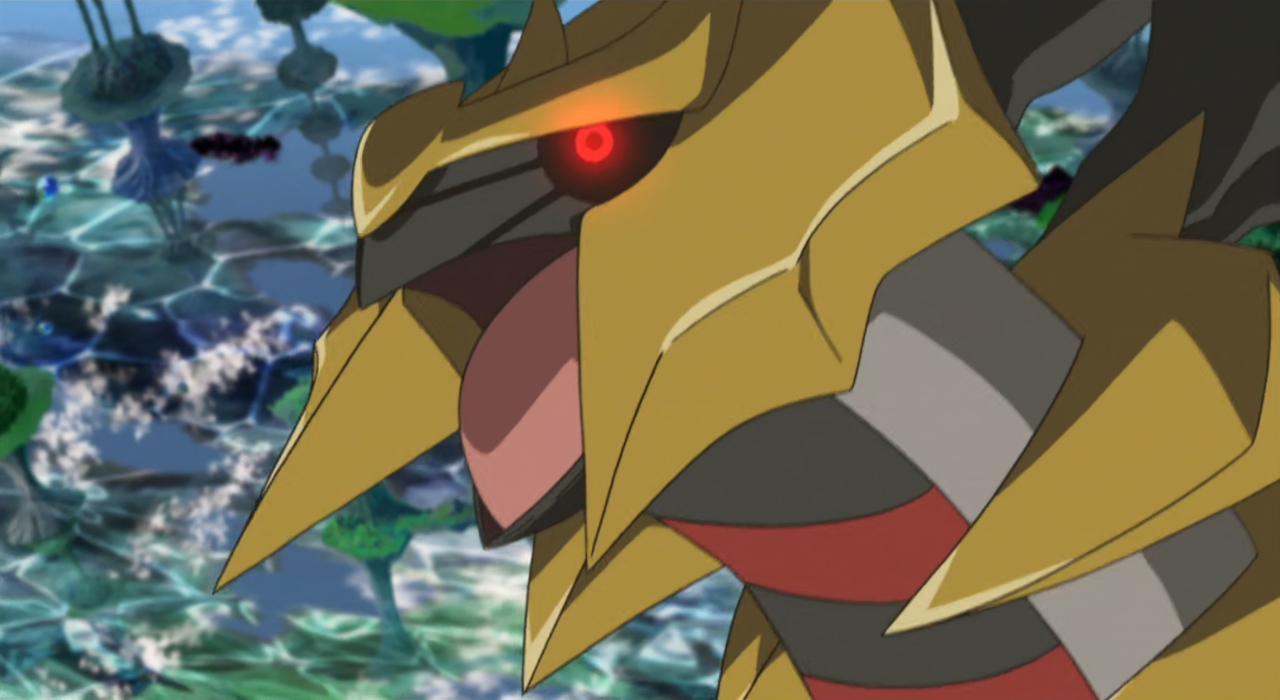
Years later, I met the woman who is now my girlfriend.
Something felt familiar.
She was the kind of person I wanted in my life.
But this time, I was different.
Not perfect, but different.
When I was busy, I didn't disappear and expect her to interpret the silence.
I told her.
When I cared, I tried to express it honestly.
Instead of treating compromise like an inconvenience, I began understanding that compromise is part of building a life with another person.
Something unexpected happened as a result.
My feelings became stronger because I wasn't performing.
I wasn't saying what I thought someone wanted to hear.
I wasn't following a script for what a relationship was supposed to look like.
I was becoming more honest about where I was emotionally.
More honest about what I wanted.
More honest about what I could give.
Most importantly, more willing to listen to what she needed too.
The responsibility I once found overwhelming started becoming part of what made the relationship meaningful.
This is where Giratina's story completes itself.
Later, Cyrus attempts to reshape reality, his ambitions threaten the universe, and Giratina intervenes.
The Pokémon that once opposed Arceus alongside Volo now protects the world from someone pursuing a similarly destructive path.
That is how we know something changed.
Not because Giratina says, "I'm better now."
But because another moment arrives, another person, another threat, another opportunity to make a familiar choice.
Yet Giratina chooses differently.
That is what redemption looks like.
We often want proof that we've changed to come from how badly we regret the past.
But regret isn't always the strongest evidence.
Choice is.
You encounter another relationship and communicate this time.
You enter another workplace and set the boundary.
You receive criticism and listen instead of immediately becoming defensive.
You recognize the kind of situation where you once hurt someone and decide you don't want to repeat it.
We cannot return to the original moment.
There is no dialogue option, no new game, that lets me reopen that old relationship and become the person I should have been then.
The past is locked.
But life often gives us echoes.
Not identical situations.
Similar choices.
Those choices give us an opportunity to demonstrate what reflection actually changed.
Giratina avoids attacks by its ally Pokémon!
Giratina can also have Telepathy, allowing it to anticipate and avoid attacks from allies.
For a Pokémon once defined by aggression, there is something fitting about an ability based on awareness.
Not everything happening around us is an attack.
Not every request from a partner is criticism.
Not every disagreement means rejection.
Maturity often involves creating enough space between what we feel and what we do next.
I can feel overwhelmed and communicate that I need time.
I can feel scared without disappearing.
I can feel insecure without making someone else responsible for constantly proving my worth.
The emotion can remain real.
Our response can still change.
For years, one of the stories I carried was that I was difficult to love.
Now I see something different.
I was scared.
Scared of vulnerability.
Scared of being hurt.
Scared of letting somebody know how much they mattered because then losing them would matter too.
And because I couldn't always be honest about those fears with myself, I couldn't possibly communicate them honestly to someone else.
That person made mistakes.
Some of those mistakes hurt people.
I don't need to pretend otherwise.
However, I also don't need to hate him forever.
He had learning to do.
He had growing to do.
He had wounds he hadn't understood yet.
Understanding him isn't the same as excusing everything he did.
It simply allows me to look at my past with enough compassion to learn from it.
There is an enormous difference between "that was wrong" and "I am permanently wrong."
One is accountability.
The other is condemnation.
Giratina used Shadow Force
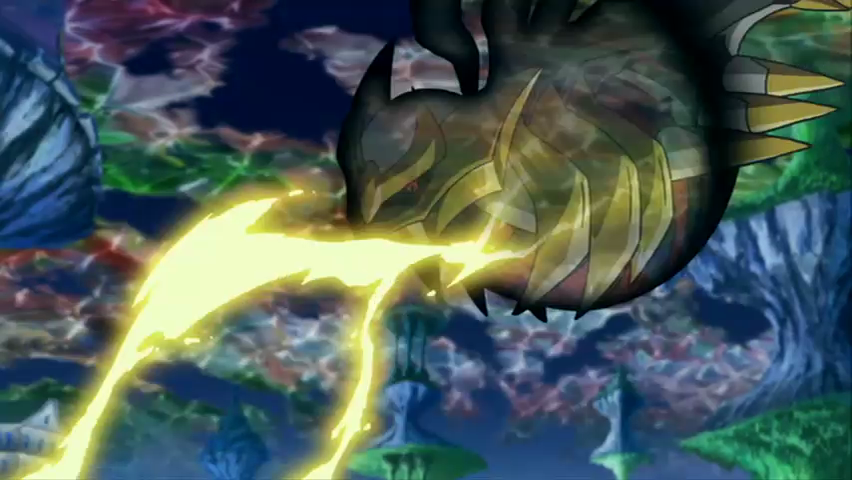
Giratina doesn't stop being associated with shadows after changing its ways.
It doesn't erase the Distortion World.
Its banishment remains part of its story.
Its aggressive past remains part of its mythology.
Yet that same Pokémon eventually becomes capable of protecting the universe it once opposed.
That may be why Giratina's story matters.
Redemption does not always look like becoming unrecognizable.
Sometimes it means taking the same strength, the same history, the same complicated personality, and choosing what they will serve now.
We cannot rewrite our childhoods.
We cannot reopen every relationship.
We cannot undo every moment when fear made our choices for us.
But eventually another moment arrives.
Someone else offers us trust.
Another workplace asks us to lead.
Another conflict gives us a chance to listen.
Another relationship asks us whether we're finally willing to be vulnerable.
There, standing inside a moment that feels strangely familiar, we discover whether anything actually changed.
The Distortion World may remain behind us.
Sometimes part of it remains inside us.
But we don't have to spend the rest of our lives silently watching the world through the identity of our worst chapter.
Giratina didn't erase what happened.
It changed what happened next.
Maybe that is enough to begin.
I can't rewrite my past, but I can respond differently when life gives me a similar choice.
Choose Your Next Safari Ball Adventure
Gible | Dhelmise | Deino
🎧 Want the human side of Pokémon?
🎙️ As The Pokeball Turns explores the Trainers.
Listen to real stories about:
- Community leaders
- Collectors
- Creators
- Everyday fans
The Story of Rotom