The Story of Gible
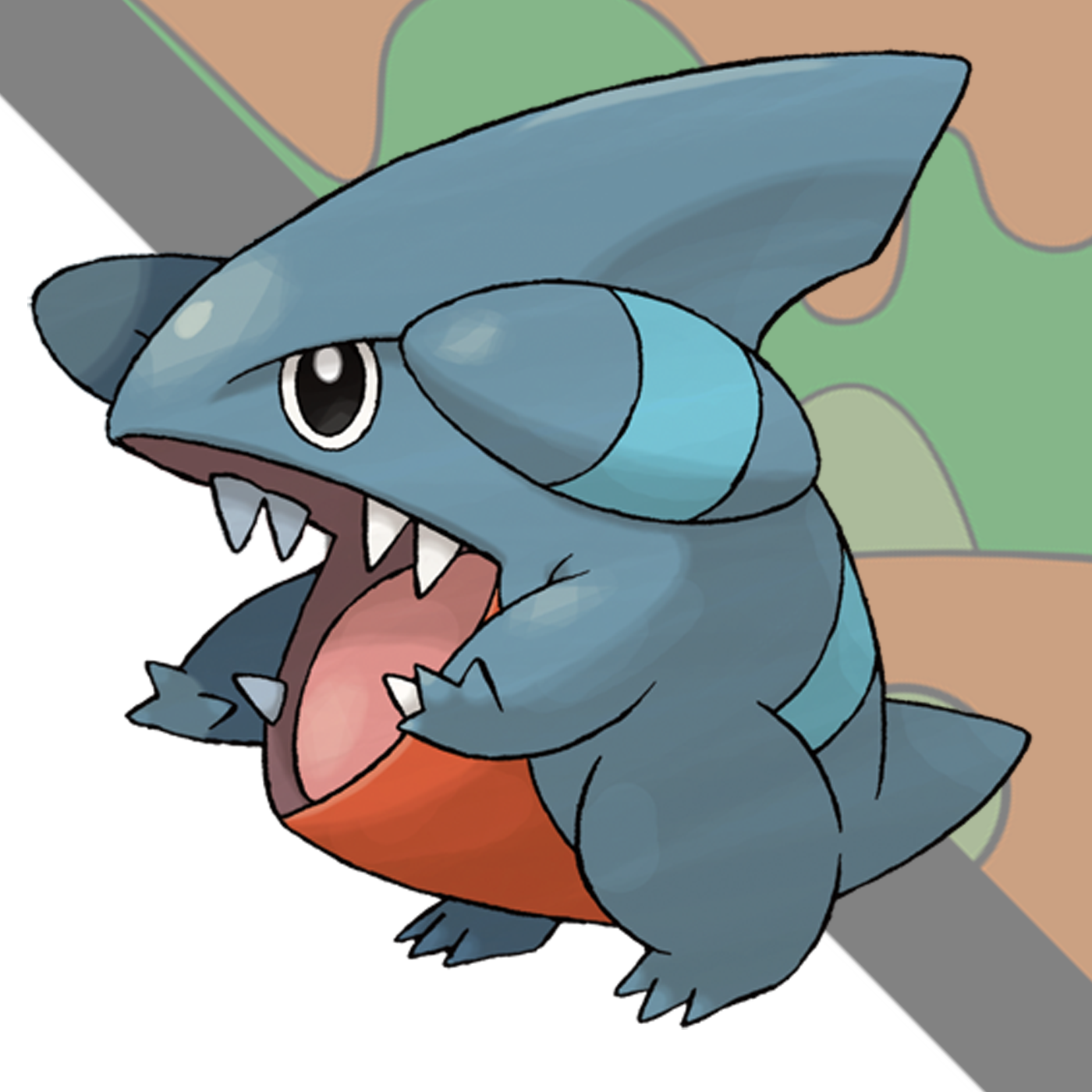
Deep inside a cave warmed by the desert heat, a small Gible emerges from its nest.
Its enormous mouth opens as it notices movement nearby. It doesn't hesitate. Gible lunges forward, sinking powerful jaws into whatever caught its attention.
The bite is strong enough to tear through metal. But Gible hasn't completely learned how to control that strength.
It attacks with so much force that it can hurt itself in the process. One of its teeth may chip or fall out entirely.
Gible doesn't seem particularly concerned since the tooth will grow back within a few days.
For now, it continues exploring the warm cave it calls home.
There is already tremendous power inside this little Pokémon. It just hasn't learned what to do with all of it yet.
That's where Gible's story begins.
Not with weakness or an absence of potential, but with something many of us experience when we're still figuring ourselves out, having the ability before having the experience to use it well.
Gible
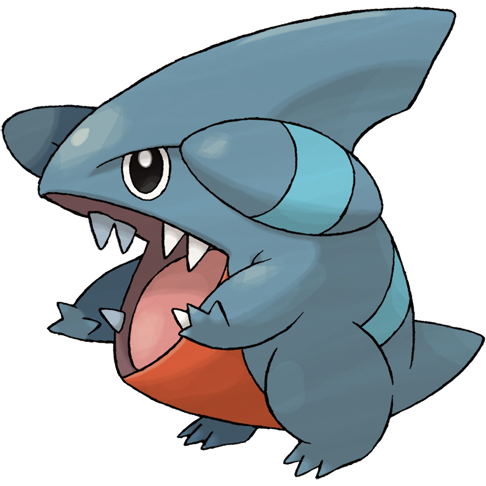
"It attacks using its huge mouth. While its attacks are powerful, it hurts itself out of clumsiness, too."
—Pokémon Platinum
Watching Gible attack might make it easy to focus on its mistakes.
It can be clumsy. Its attacks can hurt itself. Its own strength can chip its teeth.
But focusing only on the mistake overlooks something important. Gible was strong enough to do the damage in the first place.
Its problem isn't a lack of ability. It's a lack of refinement.
Potential rarely arrives looking polished.
Imagine someone learning how to cook. They find a recipe they want to make and eagerly get started.
But they cut the vegetables unevenly. They turn the heat too high. They add too much seasoning. And while they're focused on one part of the meal, something else starts burning.
They finally sit down, take one bite, and think, "I'm terrible at cooking."
Maybe. Or maybe they're simply inexperienced.
There's a difference.
Gible already possesses the jaws that will eventually belong to Garchomp. What it doesn't have yet is the experience necessary to use that strength effectively. And Gible's response to failure is surprisingly important.
It doesn't appear particularly bothered when its teeth become damaged. They'll grow back. So Gible keeps going.
There are mistakes that require serious reflection but there are also mistakes that are simply part of learning.
You miss the shot. You forget the line in a play. Chip the tooth like Gible.
Then you recover and try again.
Potential needs room to be clumsy before it can become skill.
This reminds me of when I was learning how to drive. Someone could spend one session with me and walk away thinking I was a terrible driver because I pressed the gas too hard or accidentally confused the brake with the accelerator. But those mistakes didn’t mean I was incapable of driving. I was still learning.
What I needed wasn’t for someone to decide what I could or couldn’t do based on a few mistakes. I needed patience, practice, and the space to get things wrong while I figured them out. Making mistakes was part of the learning process, not proof that I lacked the ability to learn.
Gible also knows something about itself that shouldn't be overlooked. It needs warmth.
Its original habitat was tropical, and it makes its home in caves heated by geothermal energy. Even there, Gible may huddle with others of its species when temperatures become cold.
There's an important difference between overcoming discomfort and deliberately living somewhere that prevents you from thriving.
Imagine someone trying to become more outgoing. They decide that growth means forcing themselves into loud parties every weekend. But they hate every minute of it.
Eventually, they conclude, "Maybe I'm just bad with people."
Then they join a small hobby group. There are six people. Everyone shares an interest. Conversation comes naturally.
Before long, they're talking, joking, and forming friendships. The person didn't suddenly acquire social skills. They found an environment where those skills had room to emerge.
Gible doesn't prove its toughness by sitting outside in a blizzard. It finds warmth and when that isn't enough, it huddles beside others.
Sometimes growth requires leaving our comfort zone.
Other times, growth requires understanding what conditions actually allow us to flourish.
That doesn't mean Gible requires perfect circumstances.
Its Sand Veil Ability makes it harder to hit during a sandstorm. Something disruptive is happening around it, yet Gible becomes more difficult to knock off course.
Emotionally, Sand Veil can represent the resilience that comes from learning how to function inside imperfect conditions.
Maybe you've worked in a fast-paced environment long enough that sudden changes no longer overwhelm you. Maybe you've traveled enough that a delayed flight becomes an inconvenience rather than a catastrophe.
The sandstorm doesn't disappear. You simply become better at moving through it.
Finding an environment where you can grow and developing the ability to handle difficult environments aren't contradictory.
We need both.
Gible's other Ability, Rough Skin, causes opponents to take damage when they make direct contact with it.
As Gible grows, there may be an emotional parallel here. Growth sometimes creates friction. Imagine someone who has always said yes whenever friends ask for something.
Need help moving? Yes.
Can you cover this? Yes.
Want to go out tonight? Sure.
Then they begin pursuing something important. Suddenly, their time has more structure. They occasionally say no.
Some people understand.
Others respond, "You've changed."
They're right.
But change isn't automatically rejection.
Sometimes becoming more intentional means you're no longer as easy to pull away from what matters.
That's the friction Rough Skin can represent.
Developing direction may change how people experience you. That doesn't mean becoming intentionally abrasive. It means accepting that growth can make certain relationships, habits, and expectations rub differently against the person you're becoming.
And Gabite gives that direction somewhere to go.
Gabite
"It habitually digs up and hoards gems in its nest. Its loot is constantly targeted by thieves."
—Pokémon Pearl
Gible reacts. Gabite searches.
One of Gabite's defining behaviors is its fascination with shiny objects. It digs through caves searching for gems and treasures, then brings what it discovers back to its nest.
It loves these objects so much that even something as simple as a glass bead can capture its attention and turn an otherwise violent Gabite docile.
That might sound like greed but emotionally, there's another way to interpret it.
Gabite has discovered something it values. That's an important stage of growing up.
When we're young, we can spend years sampling whatever happens to appear in front of us like sports, music, or drawing. Eventually, something might catch us differently. You want to understand it. You spend hours practicing without anyone telling you to. You start noticing details other people overlook.
Someone else might look at your interest and wonder, "Why do you care so much about that?"
Gabite doesn't need anyone else to understand why the gemstone sparkles. It knows that it does. That's enough to begin searching.
However, Gabite also reveals the danger of discovering something we value.
It doesn't merely admire shiny objects. It hoards them. Its nest becomes filled with the treasures it has accumulated, and Gabite fiercely protects them from anyone who might take them.
There's a difference between "I love this" and "I need to possess more of this."
Think about collecting Pokémon cards.
Maybe someone buys their first Pokémon card because the artwork reminds them of something from childhood. Then they buy another Pokémon card. Then another. Collecting brings them genuine joy. But eventually, perhaps the motivation changes. They aren't buying because they love what they're collecting anymore.
They're buying because they're afraid of missing something.
Or because someone else owns something they don't.
Or because completing the collection has become more important than enjoying it.
The object hasn't changed. Their relationship with it has.
This reminds me of my relationship with Pokémon GO.
At first, I played for the excitement of finding Pokémon out in the real world. I loved the potential of combining two things I already cared about, Pokémon and going on adventures.
Then Legendary Raids debuted, and eventually I caught my first hundo.
Something changed.
One raid became another, and then another. The joy I had found in Pokémon GO slowly turned into an obsession with getting every Raid Boss as a hundo. Whenever a Legendary Pokémon rotated into Pokémon GO, I felt like I couldn't miss my chance. I didn't know when it would come back, and if I stopped trying now, I might lose the opportunity altogether.
At some point, I wasn't raiding because it was fun anymore. I was raiding because I was afraid of missing the chance to get the thing I wanted.
Gabite can help us ask, "Do I still value this because it brings meaning into my life, or has acquiring it become the meaning?"
Knowing what matters is important. Knowing how to hold it is part of maturing.
That distinction sets the stage for Garchomp.
Because once you know what matters, the next challenge becomes developing the ability to pursue it.
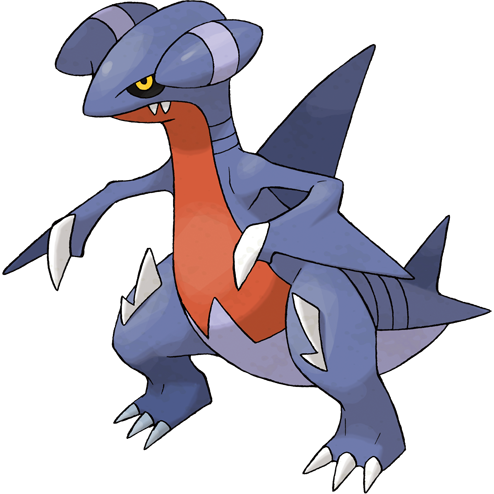
Garchomp
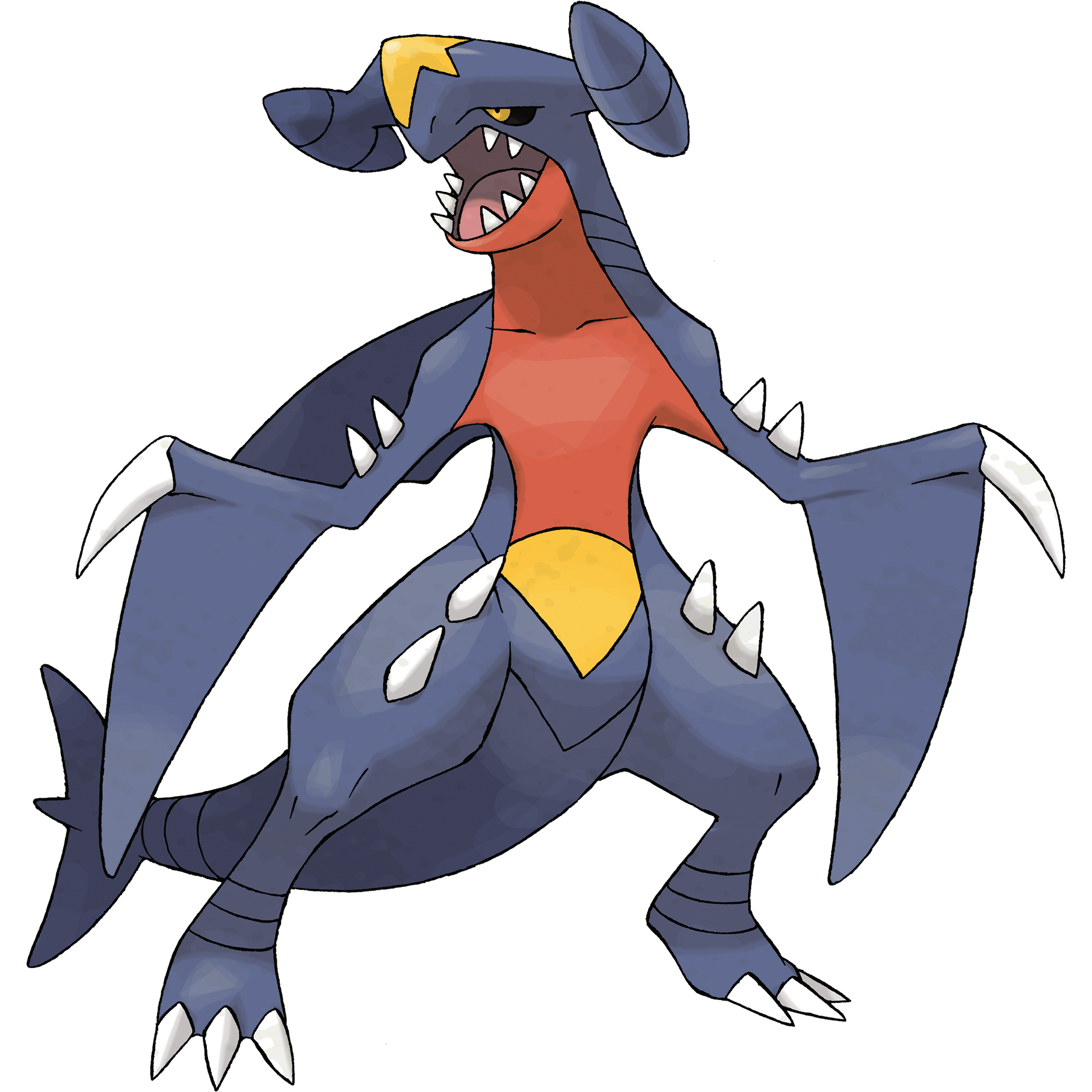
"When it folds up its body and extends its wings, it looks like a jet plane. It flies at sonic speed."
—Pokémon Diamond
Then Gible becomes something almost unrecognizable.
Garchomp can fly at speeds comparable to a jet fighter. Its fine scales reduce wind resistance. The structures on its head act as sensors capable of detecting prey from far away. It can move rapidly through both the sky and underground. And once Garchomp pursues its prey, according to Pokemon Pearl, "It flies at speeds equal to a jet fighter plane. It never allows its prey to escape."
The Pokémon that once hurt itself because it couldn't control its own strength has become extraordinarily efficient at using it.
The progression is almost perfect.
Gible: "I have power."
Gabite: "I know what I want."
Garchomp: "I know how to get there."
Imagine someone deciding they want to run a marathon.
At first, there's enthusiasm. They buy running shoes, run several miles, overwork themselves, wake up incredibly sore, and then skip a week.
That's Gible.
Eventually, they decide this isn't merely something they'd like to do. It matters to them.
That's Gabite.
Then comes the difficult part. Developing a training schedule. Improving nutrition, sleep, and recovery. Learning how to pace themselves while running. Choosing to run even when motivation isn't there.
Months later, the person crossing the finish line might not possess any more desire than the person who originally announced, "I'm going to run a marathon."
What changed was their ability to turn desire into action.
That's Garchomp.
Potential became direction. Direction became discipline. Discipline became capability.
But Garchomp's story doesn't end when it reaches its potential because gaining even more power creates a new problem.
Mega Garchomp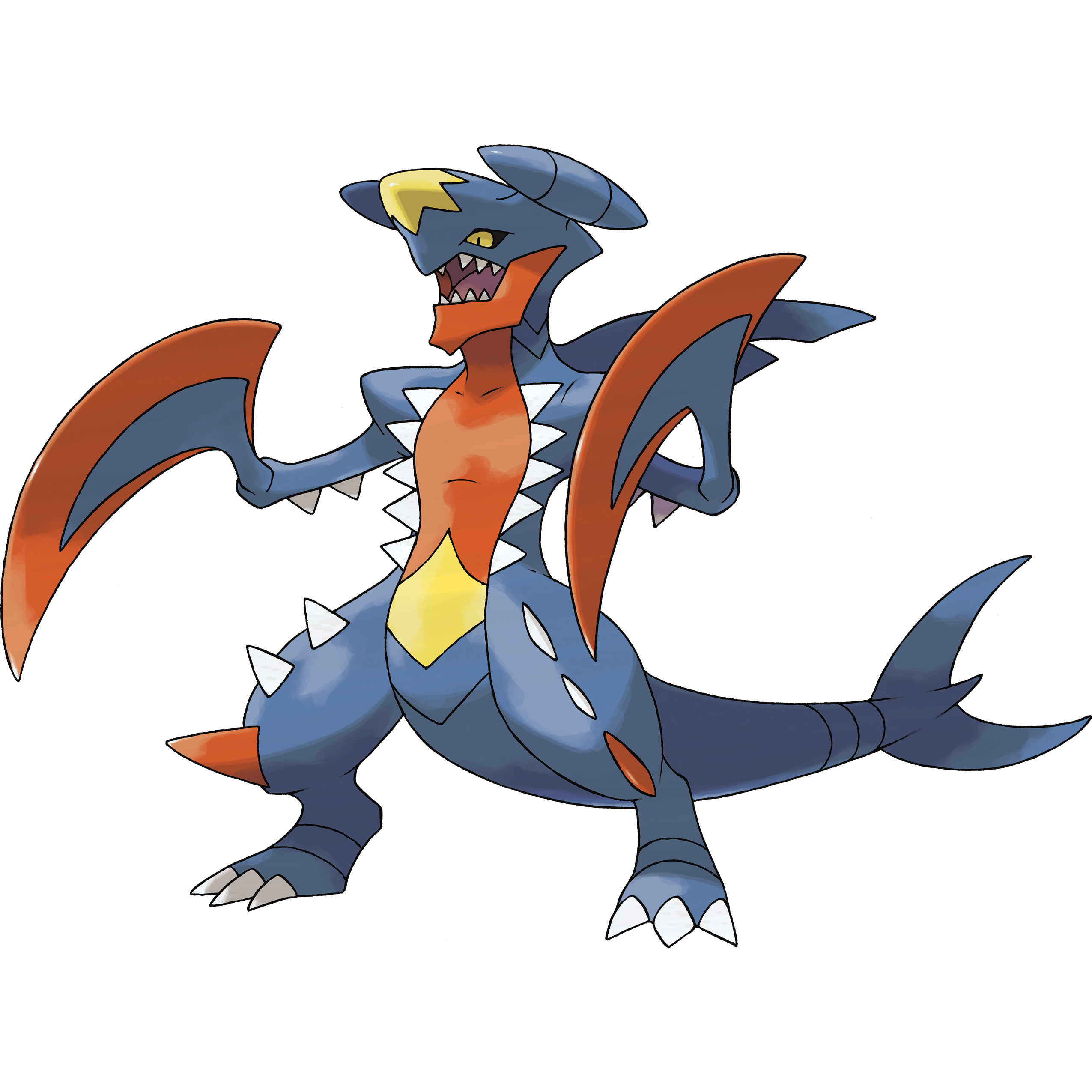
"Its vaunted wings become scythes, sending it mad with rage. It swings its scythes wildly and slices the ground to pieces."
—Pokémon Moon
Mega Evolution should theoretically represent Garchomp becoming something greater.
And physically, it does.
But emotionally, Mega Garchomp becomes one of the most complicated parts of this evolutionary line.
The tremendous energy created through Mega Evolution causes Garchomp's claws and wing-like fins to melt together, transforming its arms into enormous scythes.
According to Pokemon Moon, "Its vaunted wings become scythes, sending it mad with rage. It swings its scythes wildly and slices the ground to pieces."
Losing them infuriates it.
Mega Garchomp becomes more violent, rampaging with the weapons its body has created.
Think about what happened.
Garchomp became stronger and hated what strength required it to become.
That's worth sitting with.
Because we often assume progression automatically means improvement.
Common markers of progress or success are easy to recognize like a higher salary, a nicer car, more recognition.
Surely those things mean we’re moving forward. Surely, they mean we’re succeeding.
But what we often overlook are the sacrifices and tradeoffs hiding behind those achievements.
A higher salary might require more time away from your family, your hobbies, or the things that once made life feel fulfilling. More recognition can bring more pressure, more expectations, and more people to answer to.
If we aren’t careful, we can achieve everything we thought we wanted and still find ourselves feeling unfulfilled or questioning the direction our lives have taken.
We succeeded, but somewhere along the way, success moved us further away from the very thing that made us want to succeed in the first place.
And in chasing what looked like progress, we lost some of the joy that started the journey.
That’s Mega Garchomp.
Its new blades aren’t weaknesses. They’re tremendously powerful. That’s precisely what makes the transformation so interesting.
Mega Garchomp didn’t become worse because it gained something useless. It gained more power, but that power came with a tradeoff. And that makes it a surprisingly fitting example of what can happen when our pursuit of “more” begins pulling us away from what made us effective, fulfilled, or happy in the first place.
The question isn't, "Did this make Garchomp stronger?"
Clearly, it did.
The question is, "What did becoming stronger cost Garchomp?"
I've experienced a version of this trade-off in my own life.
After years of being involved in the DFW Pokémon GO community and taking on different leadership roles, I had the opportunity to pursue becoming a Community Ambassador.
On paper, it made sense. I had years of experience. I understood the community.
There was an area that needed to be rebuilt, and I believed I had the skills and knowledge to help rebuild it. And part of me genuinely wanted to do it.
But there was something else I had to consider.
The podcast. As The Pokeball Turns.
I knew myself well enough to recognize that I couldn't give both the Community Ambassador role and As The Pokéball Turns the attention they deserved. Pursuing one would likely mean sacrificing the other.
So I chose the podcast.
Years later, DFW hosted its first GO Fest.
It was something I had dreamed about seeing in our community for nearly a decade. I wanted to help plan it. I wanted to sit at the table with the other Community Ambassadors, contribute ideas, and help create the kind of Pokémon GO experience I had spent years imagining for DFW.
There was just one problem. I wasn't a Community Ambassador.
The decision I had made years earlier meant I wasn't part of that conversation.
Suddenly, I was experiencing a consequence of my choice that I hadn't fully understood when I made it.
And it hurt.
For a moment, it would have been easy to look backward and wonder whether I had chosen incorrectly. But that's not necessarily the lesson.
Choosing the Community Ambassador path would have given me access to opportunities I eventually wanted. It also may have required sacrificing something else that mattered deeply to me.
That's what makes decisions like these difficult.
Every meaningful choice closes certain doors while opening others.
We usually make those choices while looking at the doors directly in front of us. We don't always know which closed door we'll encounter again five years later and wish we could walk through.
Mega Garchomp gives physical form to that trade-off.
It becomes more powerful. It gains enormous scythes capable of devastating opponents.
But those scythes exist because something Garchomp valued, its wings, was transformed.
The power is real. So is the loss.
And perhaps maturity isn't pretending the loss doesn't matter simply because we still believe in the decision that caused it.
Sometimes we can believe, "I chose the path that mattered more to me." while simultaneously admitting, "I wish I could have kept what that choice required me to give up."
That's Mega Garchomp.
Growth doesn't always ask us to choose between something good and something bad.
Sometimes it asks us to choose between two things we genuinely want, knowing that becoming one version of ourselves may mean letting go of another.
And sometimes we don't fully understand the weight of that trade-off until years later, when we finally encounter the opportunity on the other side of the door we chose to close.
Mega Garchomp Z
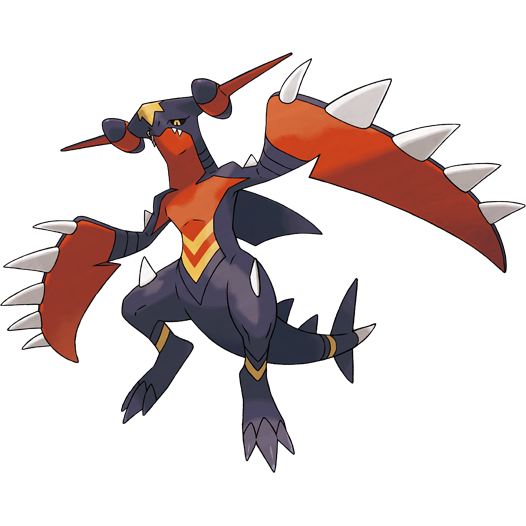
"Garchomp has gained a new Mega-Evolved form. It flies around foes at Mach speed and cuts them to shreds with its sinister wing claws."
—Pokémon Legends: Z-A
Then we see another possibility. Mega Garchomp Z.
This transformation also gives Garchomp extraordinary power but something fundamentally different happens.
Rather than melting Garchomp's wings into weapons, Mega Garchomp Z's wing-like fins become larger.
Its flight capabilities improve. Its Dragon-type energy becomes stronger. It constantly hovers above the battlefield and can fly around opponents at Mach speed.
And perhaps most importantly, Mega Garchomp Z remains calm and composed.
Compare that with Mega Garchomp.
Both became stronger.
One became enraged because the transformation destroyed something it valued about itself.
The other becomes stronger by expanding those characteristics.
Mega Garchomp says, "Power required me to sacrifice something I loved about myself."
Mega Garchomp Z says, "Power allowed me to become more fully what I already was."
That's an important distinction when choosing our own direction.
Growth doesn't always need to look like climbing the most obvious ladder. Sometimes the better opportunity isn't the one with the biggest title. It's the one that allows you to keep doing what gives the work meaning.
Going back to my previous example with Mega Garchomp, not being allowed at the table to help create the event didn't mean the event couldn't still have my fingerprints somewhere on it.
It didn't mean I couldn't create my own table.
And that's what I did.
I took the community relationships I had built through years of involvement with DFW Pokémon GO and combined them with the storytelling and community-building skills I had developed as a podcaster. From there, I created the "No Trainer Left Behind" campaign.
I gave away Mewtwo wristbands and invited people in the community to come play alongside me so they wouldn't have to experience the event alone.
I couldn't contribute to GO Fest in the way I had once imagined.
So, I contributed in a way that looked like me.
I didn't need to become the Community Ambassador version of myself to make an impact. I could take what I had already spent years developing and find another way to use it.
Sometimes becoming better doesn't require replacing yourself.
It requires developing what was already there.
Garchomp used Dragon Rush
Gible begins with tremendous potential. It's messy, clumsy, and impulsive.
Sometimes it hurts itself trying to use strength it hasn't learned to control.
But it keeps going.
Eventually, Gabite begins discovering what matters.
It searches, collects, and protects.
It develops direction.
Then Garchomp becomes capable of pursuing its targets with astonishing speed and precision.
Potential becomes skill. Desire becomes direction. Direction becomes execution.
But its Mega Evolutions reveal that reaching our potential isn't necessarily the end of the story.
Because eventually another question appears, "what are you willing to become to keep progressing?"
More isn't automatically better.
Mega Garchomp gained power and lost something it valued.
Mega Garchomp Z gained power by developing something it valued.
That's the difference between simply growing and growing in alignment with who you are.
You don't need to have everything figured out when you're Gible.
You can be talented and clumsy. You can make mistakes. You can chip a few teeth along the way.
Eventually, you'll discover some gemstones worth pursuing.
You'll become better at navigating dark caves. You'll learn how to turn potential into capability.
Just remember to occasionally look at the person that pursuit is creating because reaching your potential isn't only about asking, "How powerful can I become?"
Sometimes the more important question is, "Will I still recognize myself when I get there?"
Choose Your Next Safari Ball Adventure
Deino | Jangmo-o | Frigibax
🎧 Want the human side of Pokémon?
🎙️ As The Pokeball Turns explores the Trainers.
Listen to real stories about:
- Community leaders
- Collectors
- Creators
- Everyday fans
The Story of Giratina