The Story of Dhelmise
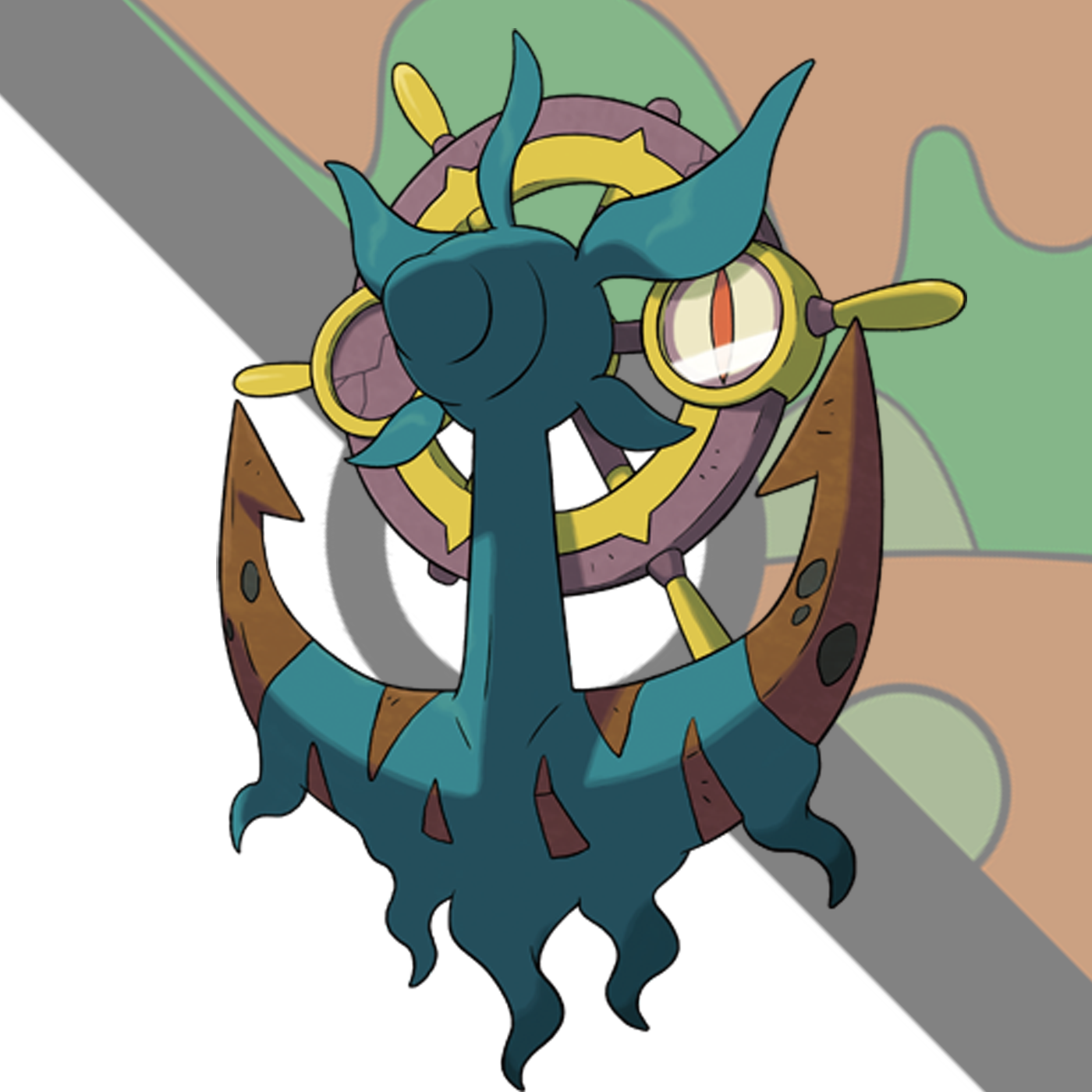
At the bottom of the ocean sits what remains of a ship that sailed across the water. Its wheel helped determine its direction. Its anchor kept it secure.
Then, somewhere along the way, the ship sank, and the journey ended.
The vessel became debris scattered across the seabed. But that wasn't the end of its story.
Seaweed eventually merged with pieces of the wreckage, and from those remains emerged Dhelmise.
At first glance, Dhelmise appears to be a haunted anchor and ship's wheel held together by seaweed.
But the anchor isn't Dhelmise. Neither is the wheel. The seaweed is its true body.
Everything else is something Dhelmise picked up along the way.
That makes Dhelmise an unusual Ghost-type Pokémon, but it also gives us a powerful picture of rebuilding our lives.
Because sometimes what we've been through becomes so visible that other people and eventually ourselves begin confusing what we carry with who we are.
Dhelmise reminds us that our past can become part of us without becoming our identity.
Dhelmise
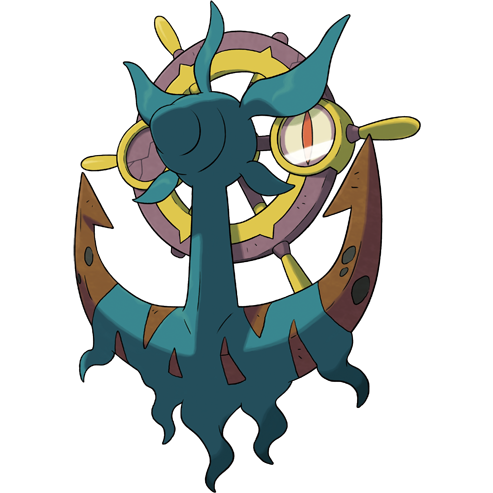
"The soul of seaweed adrift in the waves became reborn as this Pokémon. It maintains itself with new infusions of seabed detritus and seaweed."
—Pokémon Moon
According to the Pokémon Sword Pokédex, "After a piece of seaweed merged with debris from a sunken ship, it was reborn as this ghost Pokémon."
There's something important about the word reborn.
Reborn means to be born again, brought back to life, or given a fresh spiritual start.
Dhelmise doesn't repair the ship. It doesn't raise the wreckage from the ocean floor and continue whatever journey the ship was originally taking.
Instead, something entirely different emerges from what remains.
That's an important distinction when we think about rebuilding.
Sometimes we experience an ending and immediately want everything to return to what it was. Common examples are when a relationship ends, and we want the relationship back. A career doesn't work out, and we want the old plan back. A project fails, and we desperately try to recreate the version we originally imagined.
But rebuilding doesn't always mean restoration.
Imagine someone who spent years preparing for a particular career only to discover after entering the field that it wasn't right for them. Those years weren't necessarily wasted.
Maybe they learned how to communicate.
Maybe they developed organizational skills.
Maybe they met people who became important friends.
Maybe the experience helped them understand what they actually wanted from their work.
Their original plan may have sunk, but pieces of it can still become part of whatever they build next.
In my own life, this reminds me of the decision to transition out of the social work field. I entered the field wanting to use my degree to help people and do something meaningful. And in some ways, I did. I was able to help people and make a small difference in their lives.
But over time, I also had to acknowledge what the work was costing me. The stress took a toll on my body, and the emotional demands of the field, combined with the way I’m wired, made the work unsustainable for me. Leaving didn’t mean that the work wasn’t meaningful or that my desire to help people had disappeared. It meant recognizing that something can be good and worthwhile while still not being something you can sustainably keep doing.
That's Dhelmise.
The ship is gone but the anchor remains. The wheel remains. The seaweed takes what survived and creates something the original pieces could never have become on their own.
In addition, Dhelmise's appearance creates an interesting misunderstanding.
If someone saw it for the first time without knowing its biology, they might reasonably assume the anchor was the Pokémon.
It's large, looks powerful, and is immediately noticeable. But underneath all that steel and debris is Dhelmise's actual body, the seaweed.
We can experience something similar.
People may know us by our careers, accomplishments, or our relationships. Eventually, we can start defining ourselves by those things too.
Imagine someone who spends decades as a teacher. People know them as a teacher. Their schedule revolves around teaching. Their relationships develop through teaching. They're proud of what they've accomplished.
Then retirement comes.
Suddenly, a surprisingly difficult question appears, "Who am I if I'm not a teacher anymore?"
Teaching wasn't fake. It genuinely became part of their life.
But it was something they did, not the entirety of who they were.
Dhelmise doesn't need to throw away its anchor to prove the anchor isn't its identity.
It can carry it, use it, even become extraordinarily skilled with it, and still remain something underneath.
That distinction becomes even more interesting through Dhelmise's only Ability, Steelworker.
Steelworker increases the power of Dhelmise's Steel-type moves. Yet Dhelmise isn't a Steel-type Pokémon. It's Ghost/Grass.
Steel has become an important part of how Dhelmise interacts with the world without changing what Dhelmise fundamentally is.
Emotionally, Steelworker represents learning how to use what life has given us without allowing it to completely define us.
Maybe someone experienced repeated changes growing up. Eventually, they become incredibly adaptable.
But there's an important difference between saying, "This experience gave me something" and "This experience is who I am."
Dhelmise carries the remains of something that came before it.
It doesn't reject them. It transforms their purpose.
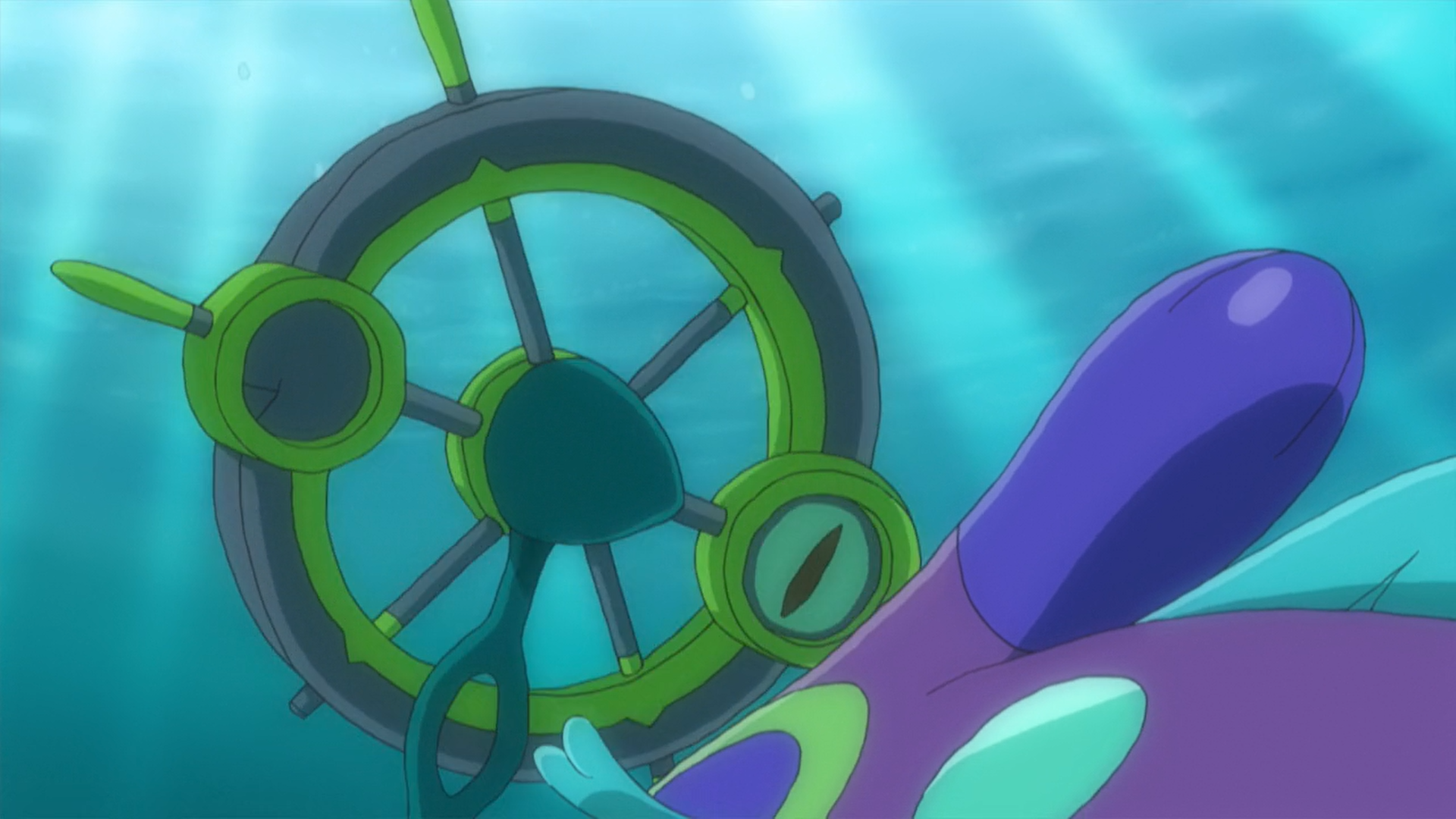
An anchor that once kept a ship stationary becomes something Dhelmise can swing with enough force to knock out enormous prey.
Something designed to stop movement becomes a source of power.
Maybe that's another part of rebuilding.
Sometimes we don't need to discard what came from our past.
We need to discover what else it can become.
Wailmer and Wailord - Prey in the Water
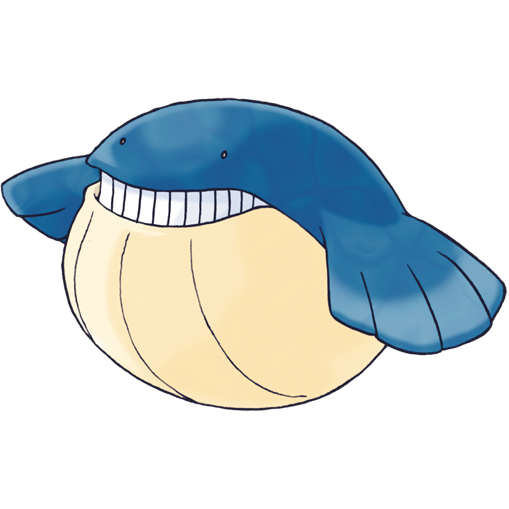
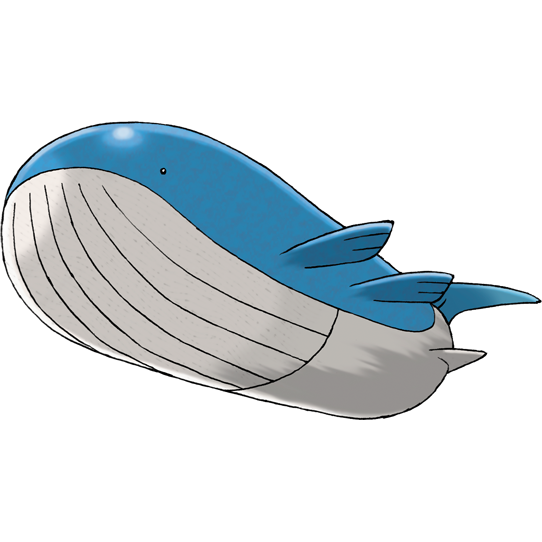
"Swinging its massive anchor, it can KO Wailord in a single blow. What appears to be green seaweed is actually its body."
—Pokémon Sun
Dhelmise doesn't exclusively pursue easy prey.
It specifically prefers large Pokémon such as Wailord.
Its anchor is powerful enough to knock out even a Wailord with a single blow. Dhelmise can then envelop its prey in seaweed and drain its life force.
Why pursue something so enormous?
The Pokédex doesn't give us Dhelmise's internal thoughts, so we can't know its exact motivation.
But its behavior reveals something interesting, Dhelmise doesn't seem intimidated by scale.
A Wailord (14.5m) is enormous compared with Dhelmise (3.9m).
Yet size doesn't determine which Pokémon holds the advantage. Dhelmise knows what its anchor can do.
Emotionally, that can represent what happens when experience gives someone confidence in the tools they've developed.
Think about being offered an opportunity that initially feels far beyond your abilities.
Your first thought might be, "That's too much for me. I can't do it."
But size alone doesn't determine whether you're prepared.
Maybe you've spent years developing the skills necessary to handle something this large without realizing it.
Ferroseed needed practice before it could accurately use its spikes. Dhelmise is different.
It swings an enormous piece of shipwreck with enough confidence to challenge one of the largest Pokémon in the ocean.
Its behavior suggests something beyond simple aggression. Dhelmise knows how powerful what it carries has become.
There is a darker side to that confidence, though.
Dhelmise doesn't merely defeat Wailmer and Wailord. It drains their vitality.
Strength gives Dhelmise the ability to pursue large targets, but ability doesn't automatically tell us whether something should be pursued.
That's another part of maturity.
Learning what we're capable of is important.
Learning what deserves our strength matters too.
Skrelp and Dragalge - Friend from Familiarity
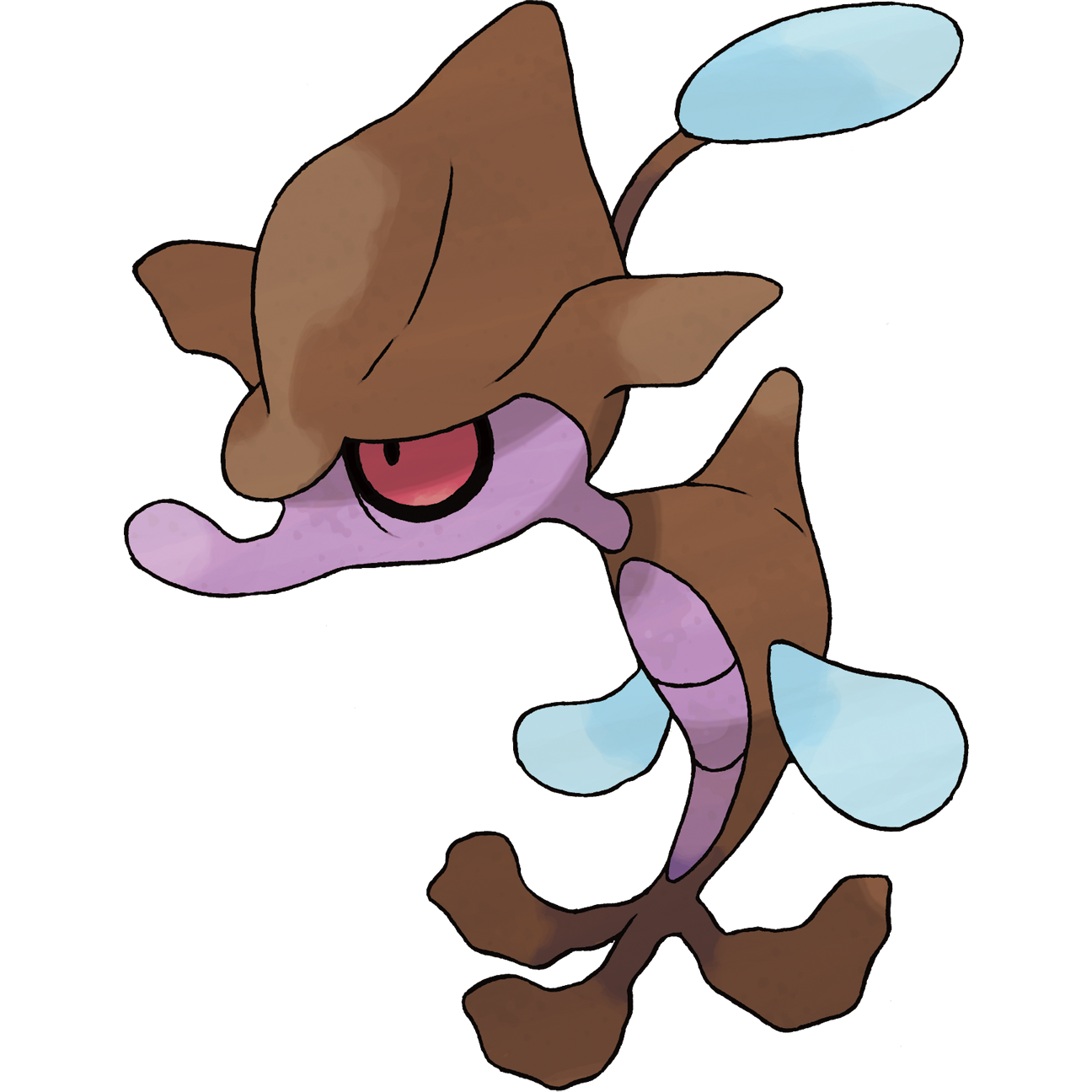
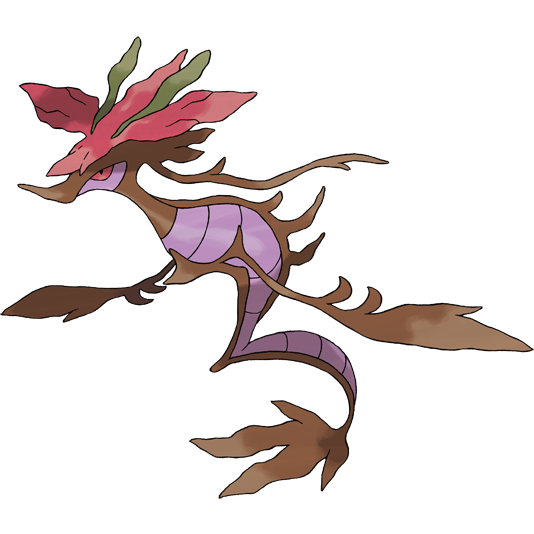
"Its chain-like green seaweed can stretch outward for hundreds of yards. For some reason, it gets along well with Skrelp."
—Pokémon Ultra Moon
For a Pokémon capable of violently hunting Wailord, Dhelmise has an unexpectedly peaceful relationship with Skrelp and Dragalge.
Dhelmise is known to get along well with them.
The Pokédex doesn't explicitly tell us why. But their biology gives us a possibility.
Skrelp disguises itself among seaweed. Dragalge resembles drifting seaweed. And Dhelmise's actual body is seaweed.
That creates a natural familiarity between them.
To Dhelmise, Skrelp and Dragalge may not register in the same way as the large prey it hunts. Their appearance and behavior resemble the environment Dhelmise itself is physically connected to.
Perhaps they feel less like intruders and more like part of the landscape Dhelmise understands.
Emotionally, their relationship gives us a completely different side of Dhelmise.
Dhelmise is capable of tremendous violence, but it isn't hostile toward everything it encounters. It distinguishes between prey and companionship.
This reminds me of the different environments I’ve had to navigate and the different hats I’ve learned to wear. Maybe you can relate.
When I’m with friends, I’m the person who’s passionate about Pokémon and runs a podcast. Around family, I tend to be more reserved and indifferent, shaped by personal history and unspoken conflicts that have never fully been resolved. And at work, I’m professional, courteous, and composed.
Each environment seems to bring out a different version of me, not necessarily because any one of them is less authentic, but because we learn how to adapt depending on where we are and who we’re with.
My personality didn't suddenly change. The environment did.
Skrelp and Dragalge may represent something similar for Dhelmise.
There's familiarity, a shared habitat, and perhaps something resembling recognition.
Skrelp hides within seaweed. Dragalge resembles it. Dhelmise is literally seaweed.
And that makes Dhelmise's relationships with these Pokémon particularly revealing.
With Wailmer and Wailord, Dhelmise demonstrates confidence in its strength.
With Skrelp and Dragalge, it demonstrates discernment in how that strength is used.
Not everything larger than us needs to intimidate us.
And not everything we are capable of overpowering needs to become an opponent.
Dhelmise used Anchor Shot
Maybe that's ultimately what makes Dhelmise so fascinating.
Dhelmise isn't defined by one thing.
Not the shipwreck. Not the anchor. Not its hunting. Not even the seaweed from which it was reborn.
It's the combination of what happened, what remained, what was added afterward, and what Dhelmise learned to do with all of it.
Maybe we're similar.
Our past matters. The environments that shaped us matter. The things we've lost matter. The skills we developed because of those experiences matter.
But none of those pieces individually tell the entire story of who we are.
Sometimes life leaves us standing among wreckage wondering how we're supposed to put everything back together.
Dhelmise offers another possibility,
Maybe you aren't supposed to rebuild the old ship.
Maybe some pieces deserve to stay behind.
Maybe you'll discover new things along the way that weren't part of the original plan at all.
And maybe years from now, you'll look at everything you've accumulated and realize something important.
You aren't the wreckage. You aren't even the anchor everyone sees.
You're the one who learned how to carry it.
Choose Your Next Safari Ball Adventure
Skrelp | Ferroseed | Drifloon
🎧 Want the human side of Pokémon?
🎙️ As The Pokeball Turns explores the Trainers.
Listen to real stories about:
- Community leaders
- Collectors
- Creators
- Everyday fans
The Story of Rotom