The Story of Golett
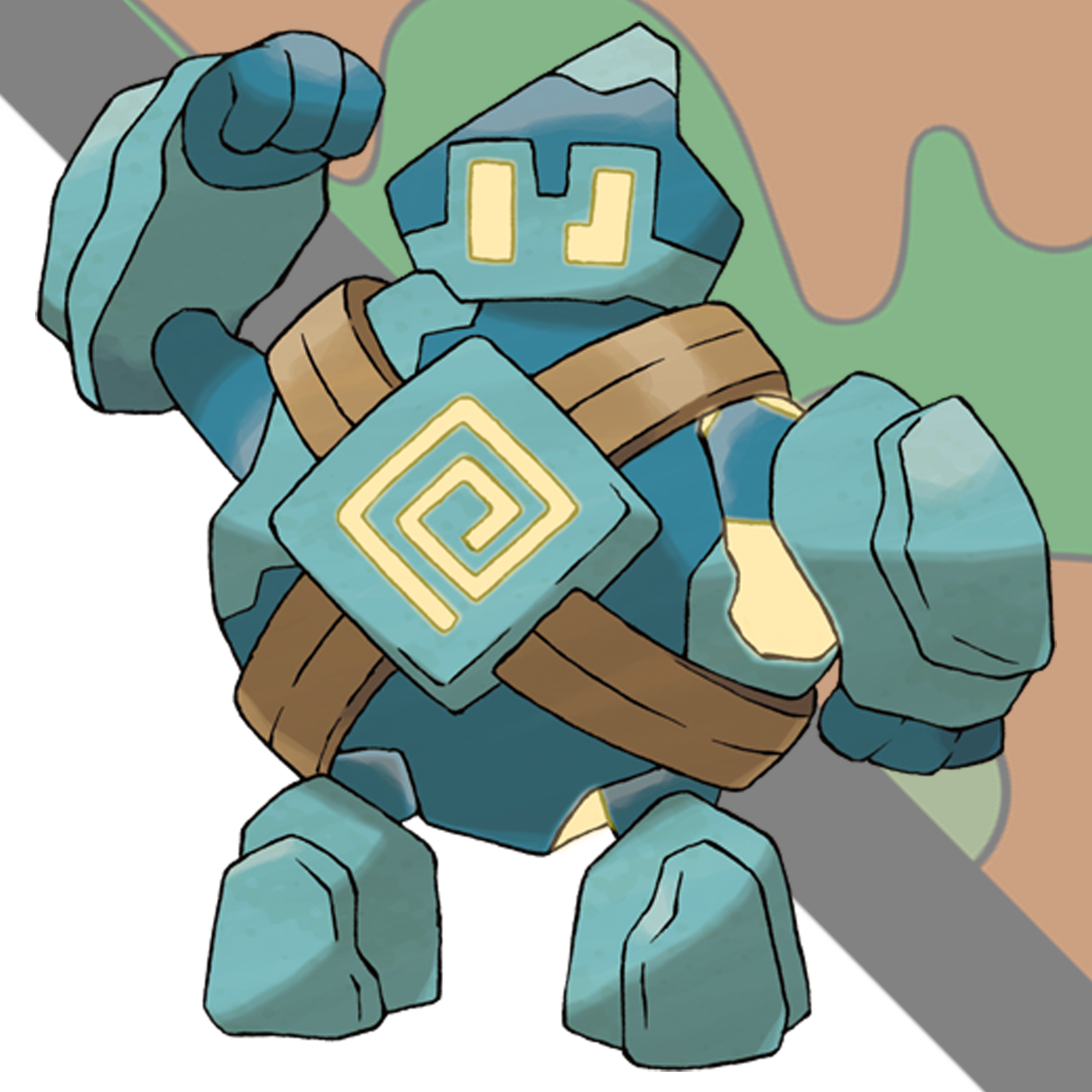
Deep among ancient ruins, a small clay figure moves quietly through the dust.
It approaches a boulder and pushes it into place.
Then another. And another.
No one appears to be directing it. No ancient builder stands nearby. No master calls out instructions.
Yet Golett continues working as though the order had been given only moments ago.
In reality, it may have been given thousands of years earlier.
Golett was created by an ancient civilization to perform heavy labor. Even after its makers disappeared, some Golett continue carrying out behaviors no one completely understands.
The mysterious energy inside them keeps burning and the work continues.
But eventually, Golett's story raises a question that goes far beyond ancient ruins.
Is having something to do the same thing as having a purpose?
Golett
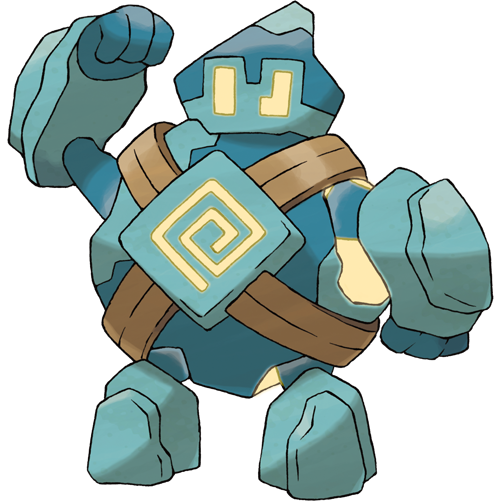
"The energy that burns inside it enables it to move, but no one has yet been able to identify this energy."
—Pokémon Black
Golett wasn't born naturally. It was made.
Ancient people shaped its body from clay and brought it to life through a mysterious form of science.
According to the Pokémon Shield Pokédex, "This Pokémon was created from clay. It received orders from its master many thousands of years ago, and it still follows those orders to this day."
Think about that. Thousands of years have passed. The people who created Golett may be long gone. The civilization itself may have disappeared. Yet the instructions remain.
Golett continues doing what it was told.
There's something admirable about that loyalty. But there's also something a little sad. Because nothing in its behavior suggests that Golett stopped to ask, "Do these instructions still make sense?"
People can inherit instructions too. Not carved into clay. But passed down through expectations.
Maybe someone grows up hearing, "You're good at science. You should become a doctor."
Someone else is told, "You'll take over the family business someday."
Another learns, "Success means getting married, buying a house, having children, and climbing the career ladder."
None of those paths are inherently wrong. They may lead to deeply fulfilling lives.
The problem begins when we never ask whether the path belongs to us.
Like Golett, we can become incredibly good at following instructions we never chose.
I think one of the more common expectations people have to work through and one I had to work through myself is the idea of having kids.
For the longest time, I liked the idea of having children. I liked imagining little versions of myself running around. I liked the thought of being called “Dad.” I pictured myself giving advice, passing down wisdom, and having those meaningful father-and-child conversations I had seen so many times on television.
But I had never really considered the reality of it.
For a long time, it almost felt taboo to even question whether I wanted children.
Aren’t you supposed to want kids? Isn’t that just part of what comes next?
Eventually, I realized I had to separate what I genuinely wanted from what I had simply assumed I was supposed to want. And I had to accept the possibility that having children might not be in the best interest of my family.
Not because I don’t think I’m capable of being a father. In many ways, I think I could be a good one. But I also understand the weight of my family’s past. I know the demons that have followed us, the things I’ve had to confront, and how much work it took for me to get to where I am now.
Having children would mean passing some part of that history on to them and hoping they would someday be able to overcome them too.
That was difficult for me to admit. There is a difference between wanting the experience of being a father and deciding whether bringing another person into the world is truly the right thing to do. Once I allowed myself to ask that question without shame, I realized it deserved a much more serious answer than, “I always thought I’d have kids.”
One of Golett's strangest behaviors makes this theme even more interesting.
According to the Pokémon Sword Pokédex, "They were sculpted from clay in ancient times. No one knows why, but some of them are driven to continually line up boulders."
Nobody seems to know why they line up boulders.
Maybe it was once part of their work.
Maybe the behavior served some forgotten purpose.
Maybe an ancient person simply told them, "Put these here."
Then left.
Whatever the reason, the behavior continues.
Emotionally, this resembles habits that survive long after their original purpose disappears.
Imagine someone who grew up in a household where money was always tight. They learned to save everything using coupons, storing containers, the way they were old clothes, they saved every dollar.
That behavior may have been necessary once.
Years later, they have a stable income but throwing away a broken appliance still makes them anxious.
The old instruction remains, "We might need this someday."
Golett lining up boulders asks us to examine some of our own routines. Not everything we continue doing is something we consciously chose.
Sometimes we're still obeying instructions from a version of life that no longer exists.
Golett’s Abilities, much like its behavior, give us further insight into its nature while encouraging us to examine similar patterns within ourselves.
Golett's Iron Fist Ability strengthens its punching moves. Emotionally, this can represent learning how to put our abilities into action.
Golett was designed for physical labor. It possesses strength. But strength becomes meaningful when it is directed toward something.
The same is true for us.
Someone can be naturally persuasive, highly organized, creative, or analytical.
Those are abilities.
Purpose asks a different question, "what are you going to use them for?"
A person can spend years becoming increasingly skilled without ever asking where those skills are leading.
Iron Fist reminds us that capability matters, but capability alone cannot choose our direction.
Golett can also have Klutz, which prevents held items from benefiting it.
This creates another useful distinction. Having access to something isn't the same as knowing what to do with it.
You can buy the expensive camera and never learn photography. You can own shelves full of books and never apply what you read. You can be given an opportunity and still not know what you want from it.
Sometimes we chase more tools, more credentials, more recognition, more opportunities. But purpose doesn't automatically appear just because we've accumulated resources.
At some point, we still have to decide what those things are for.
No Guard ensures that moves used both by and against Golett will hit. There's no hiding once the exchange begins.
Emotionally, this can represent commitment. When we genuinely commit to something, we usually become more exposed too. Starting a business opens the possibility of failure. Sharing something creative opens the possibility of criticism. Loving someone opens the possibility of being hurt.
Choosing a direction means accepting that the path may affect us in ways we can't completely control.
Golett doesn't get perfect protection while pursuing its mission.
Neither do we.
Purpose isn't the absence of vulnerability. It's deciding that something matters enough to accept the risk.
Golurk
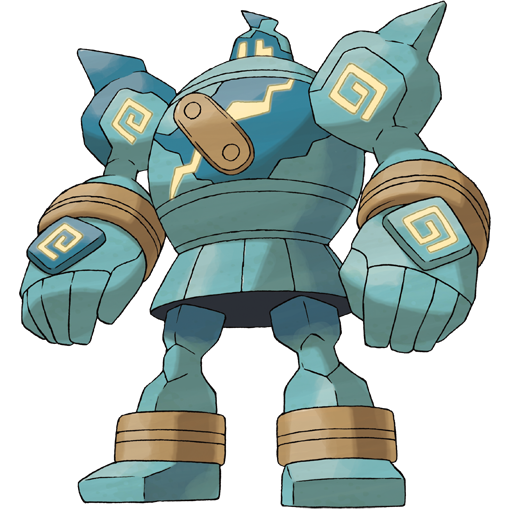
"It is said that Golurk were ordered to protect people and Pokémon by the ancient people who made them."
—Pokémon White
When Golett evolves into Golurk, its capabilities become extraordinary. Golurk can fly at Mach speeds. It can transform its body into something resembling a cannon. It has served as artillery from castle walls. And ancient people created it not only for labor, but also to protect people and Pokémon.
According to the Pokémon White Pokédex, "It is said that Golurk were ordered to protect people and Pokémon by the ancient people who made them."
Golett followed instructions. Golurk becomes incredibly capable of fulfilling them.
That sounds like success.
And sometimes it is.
There is nothing inherently wrong with inheriting a purpose. Maybe your parents introduced you to a profession that genuinely became your passion. Maybe you inherited a family tradition you deeply value. Maybe a mentor pointed you toward something you never would have discovered on your own.
The question isn't, "Did someone else introduce me to this path?"
The question is, "Have I ever chosen it for myself?"
That's what Golurk still seems to lack.
It is powerful, loyal, capable, and reliable. But its loyalty is described as unquestioning.
That creates a difference between "I protect others because protecting them matters to me." and "I protect others because that was my instruction."
The action may look identical. The ownership behind it is different.
For example, let's imagine someone who begins working at the same company at 20 years old. They work hard. They move into leadership. The company becomes part of their identity. They've been there through good years and bad years. Then, decades later, the workplace changes. The culture becomes unhealthy. The work no longer feels meaningful. But leaving feels almost impossible.
They tell themselves, "I've been here my whole career." or "People depend on me." or "This is what I do."
At some point, loyalty can become indistinguishable from programming.
Golurk's story doesn't tell us loyalty is bad. It asks whether loyalty should ever prevent us from thinking. Because there may come a time when an old instruction no longer matches the world we're living in.
Golurk carries enormous energy inside its body. A seal across its chest helps contain that energy. If the seal is removed, Golurk's internal energy spirals out of control. Its rampage can become destructive enough to reduce an entire town to rubble.
Under this story's theme, the seal represents more than self-control. It represents structure, orders, expectations, roles, rules. The things that have always told Golurk where its energy belongs.
For thousands of years, those structures have given its tremendous power a direction. But structure and purpose aren't necessarily the same thing. A schedule can tell you what to do today. A boss can tell you what needs to be completed. A family can tell you what they expect from you. However, none of those things can fully answer, "What do I want my life to be for?"
And Mega Evolution forces Golurk to confront that difference.
Mega Golurk
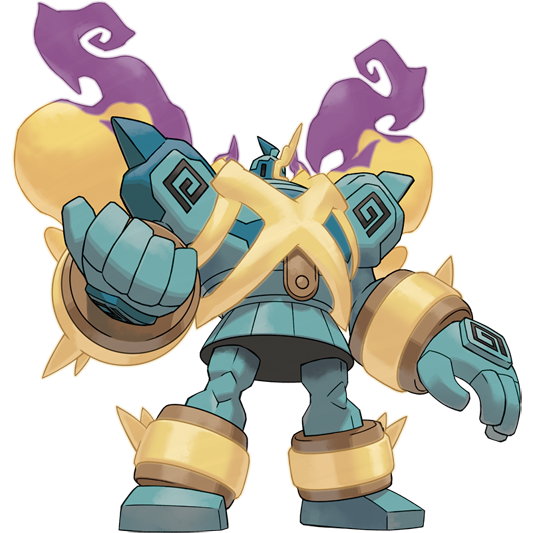
"The energy within Golurk has been stimulated by Mega Evolution. The Pokémon could explode at any moment."
—Pokémon Legends: Z-A
When Golurk Mega Evolves, its internal energy becomes too powerful for the seal that once contained it.
The seal hangs uselessly from its chest, its energy bursts outward, and Mega Golurk exists in a constant state of near-instant detonation.
At first glance, that sounds like freedom. The restraint is gone. The old structure can't hold it anymore.
But Mega Golurk doesn't become peaceful. It becomes dangerously unstable.
That's because removing someone else's instructions doesn't automatically give us our own direction.
Imagine someone who spent decades organizing their entire life around one responsibility such as their children, their career, a family business.
Every morning, they knew what had to be done.
Then suddenly, that chapter ends. The children leave home. They retire. The business closes.
For the first time in decades, nobody is waiting for them to do something.
People might say, "Now you can do whatever you want!"
But instead of feeling free, they feel lost.
"What am I supposed to do now?"
That's Mega Golurk.
The old program stopped working but a new purpose hasn't been chosen yet.
There is still tremendous energy, experience, time, and capability but none of those things automatically answer where that energy should go.
Sometimes freedom initially feels like chaos because the structures that once made our decisions for us are gone.
Mega Golurk also gains Unseen Fist, allowing its contact moves to partially break through protective effects. Even barriers that once completely stopped attacks are less effective against it.
Emotionally, this reinforces the instability of Mega Golurk's transformation.
Its power has exceeded the structures that once directed it. That isn't necessarily liberation. Sometimes power growing faster than purpose creates danger.
Mega Golurk isn't missing ability. It's overflowing with it.
What it needs isn't more power.
It needs something worth directing that power toward.
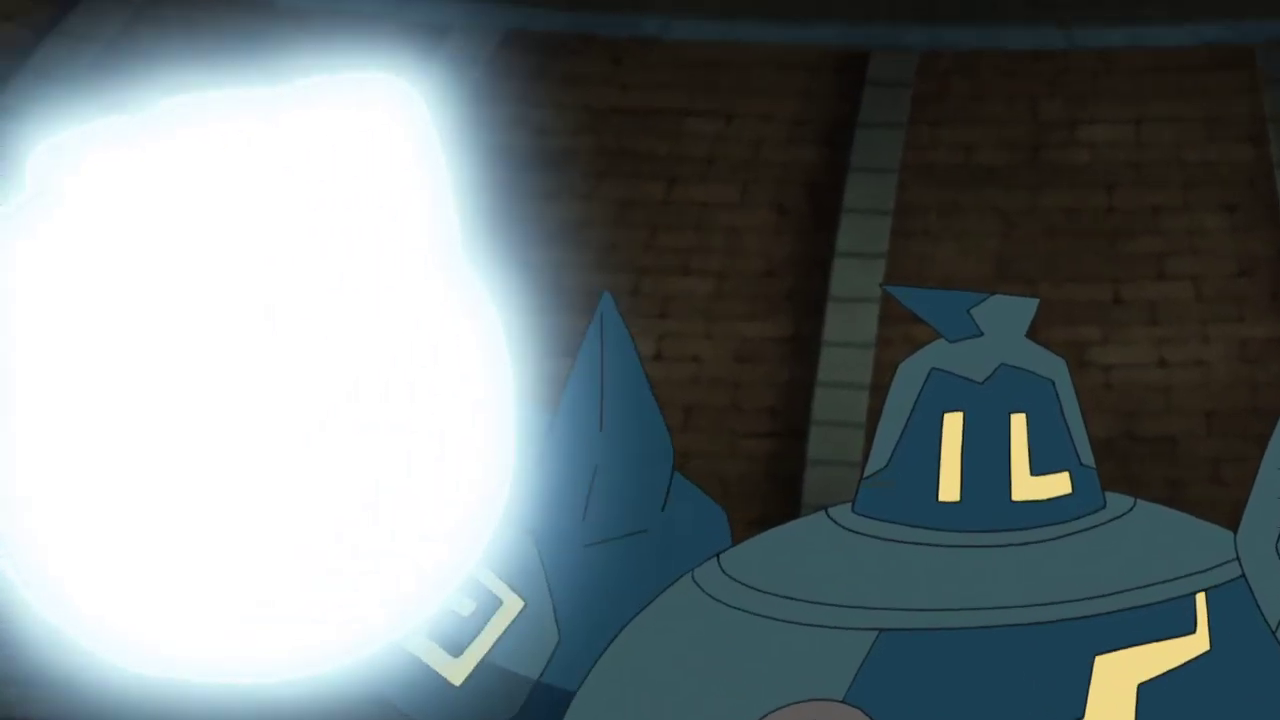
Golurk used Dynamic Punch
Golett and Golurk begins its existence with instructions already provided.
For thousands of years, those instructions give both Pokémon direction. And maybe there was nothing wrong with those instructions.
But Mega Golurk reveals the limitation of living entirely through someone else's instructions. Eventually, the old structure may stop being enough.
When that happens, freedom isn't simply removing the expectations placed upon us. Freedom is learning what deserves our energy once no one else is deciding for us.
Golett's story invites us to stop occasionally and ask, "Why am I still lining up these boulders?"
Not because every routine needs to disappear. Not because every expectation from our past was wrong. But because there is an important difference between having something to do and knowing why we choose to do it.
Purpose isn't simply following instructions.
Purpose begins when the instructions become our own.
Choose Your Next Safari Ball Adventure
Dhelmise | Mudbray | Nincada
🎧 Want the human side of Pokémon?
🎙️ As The Pokeball Turns explores the Trainers.
Listen to real stories about:
- Community leaders
- Collectors
- Creators
- Everyday fans
The Story of Gible