The Story of Pumpkaboo
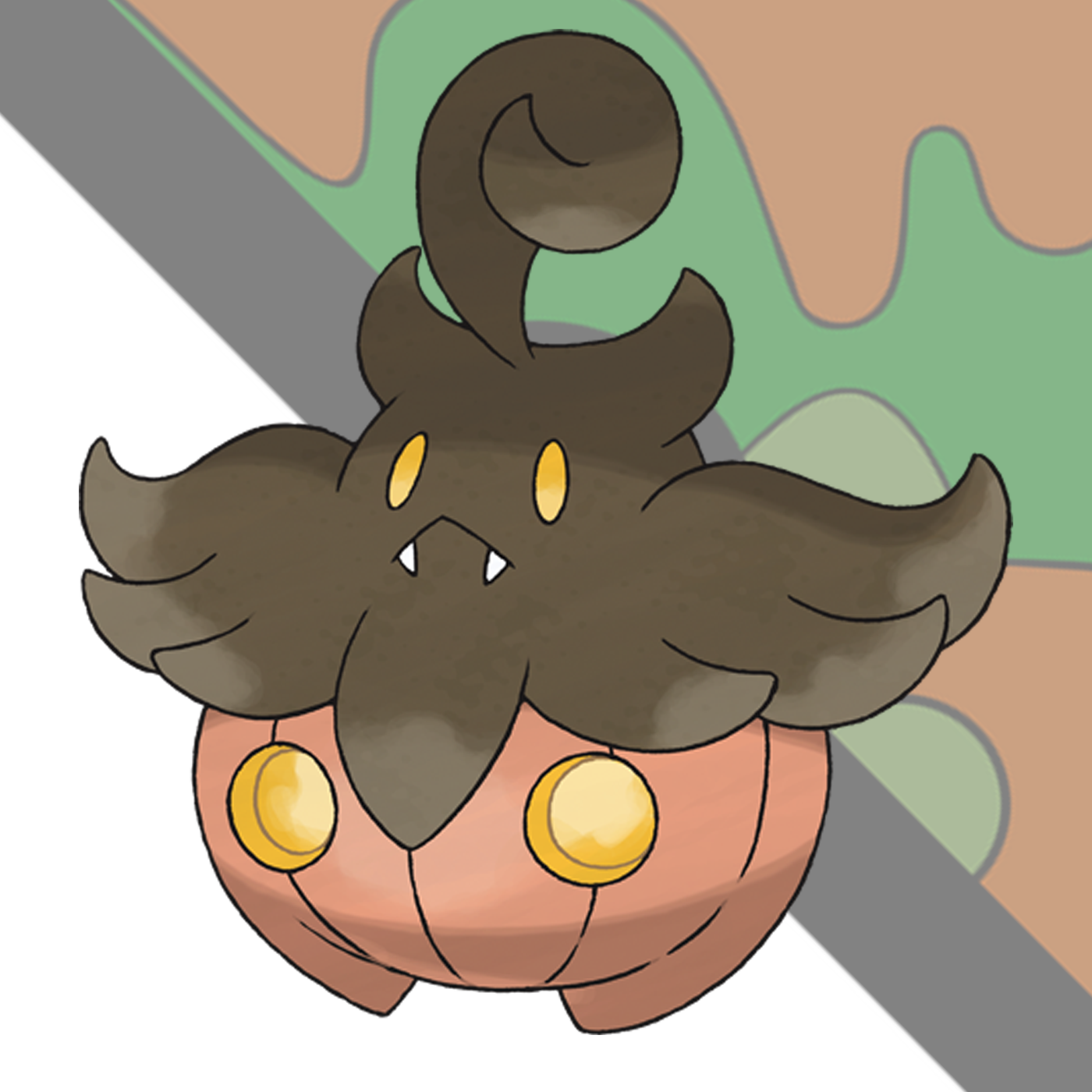
The sun has almost disappeared.
Along the edge of a quiet path, something begins moving beneath the fading light.
At first, it resembles a small pumpkin.
Then two glowing eyes appear above it.
Pumpkaboo rises from the ground.
As evening settles in, this Ghost-type Pokémon becomes increasingly active. Somewhere nearby, another presence wanders without direction. A spirit that has remained in the material world longer than it was meant to.
Pumpkaboo approaches.
Its own existence carries an unusual contradiction.
Pumpkaboo itself was born when a spirit became trapped inside a pumpkin.
Yet despite being connected to a spirit unable to leave the material world, Pumpkaboo spends its nights carrying other wandering spirits toward the afterlife.
It does not need to have completed its own journey before helping someone else with theirs.
As darkness covers the path, the holes in its pumpkin body begin to glow.
That light has two very different possibilities.
It can illuminate the darkness for travelers who cannot see where they are going or it can hypnotize them and take control.
Same light, same Pokémon, different use of its light.
Which raises an important question.
When does helping someone find their way become deciding where they should go?
Pumpkaboo
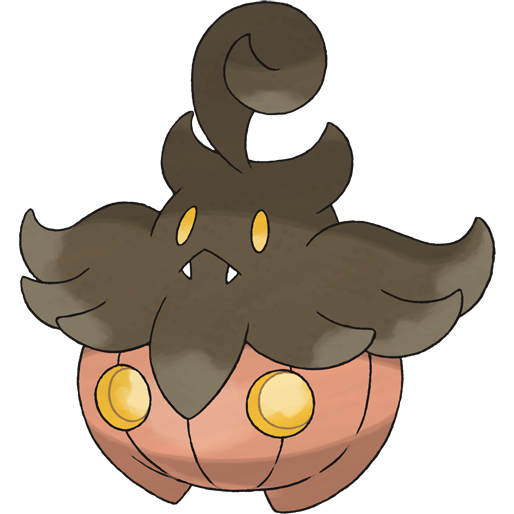
"The pumpkin body is inhabited by a spirit trapped in this world. As the sun sets, it becomes restless and active."
—Pokémon X
There is something comforting and familiar about Pumpkaboo carrying lost spirits when it is inhabited by a spirit trapped in the material world.
It would be easy to assume that someone must completely resolve their own uncertainty before they can help another person through theirs.
Life rarely works that neatly.
Sometimes the person offering directions is still figuring out their own route.
I experienced that while working as an Employment Specialist with students living with disabilities who were transitioning from high school into employment.
That period after graduation can already feel uncertain.
School gives life a structure.
Classes have schedules.
Teachers tell you where to be.
Then suddenly the next stage becomes much less predictable.
What job should I apply for?
What am I good at?
Will anyone hire me?
For students living with disabilities, those questions can carry another layer.
People may look at the disability before they ever notice the person.
They may assume someone is incapable before giving them an opportunity to demonstrate otherwise.
Part of my role was helping these students navigate that uncertainty.
I already graduated from high school.
I understood something about the strange combination of fear and hope that comes from looking at an adulthood that hasn't taken shape yet.
But there was something ironic about the position.
I was living at an uncertain stage of my life too.
I recently had been fired from another job.
My untreated sleep apnea had affected my ability to function, and I had been found asleep at work.
That previous workplace had also felt unpredictable.
So, when I entered this new position, I brought fears with me.
Would this job become another unstable environment?
Would people twist my words and eventually stab me in the back?
Was I qualified to tell young people anything about building a career when I still wasn't sure what I wanted mine to become?
Working with teenagers felt meaningful because it was something I had wanted to do.
But here I was helping young adults navigate disability, employment, adulthood, and uncertainty while quietly wondering what direction my own life was heading.
Pumpkaboo reminds me that those two things don't necessarily contradict each other.
I didn't need to know my entire career path to help someone write a résumé.
I didn't need to have every insecurity resolved to encourage someone before an interview.
I didn't need to know exactly where my own road ended to provide enough light for another person to see their next few steps.
Sometimes that is all a guide can honestly offer.
Not the destination.
Just enough visibility to continue.
Pumpkaboo used Confuse Ray
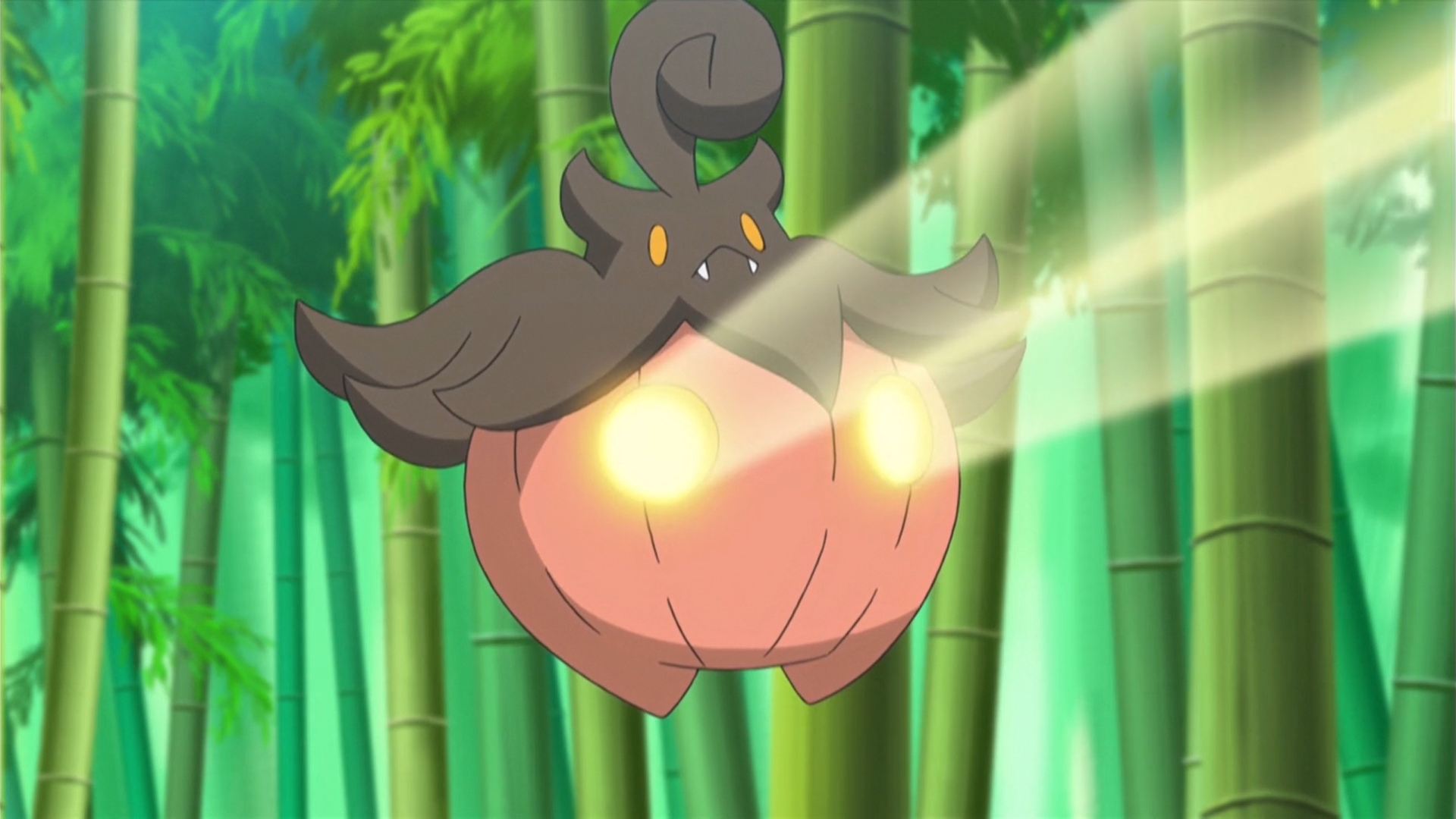
Pumpkaboo's glowing body can help travelers see through darkness.
That is probably the version of helping most of us imagine when we think about guidance.
Someone is confused.
We know something they don't.
So we provide information.
A teacher explains a concept.
A friend offers perspective.
A parent shares experience.
The person remains responsible for walking.
We simply make the road easier to see.
That distinction became increasingly important during my years in case work.
One of the principles we were taught was self-determination.
The idea is straightforward, people should have the right to make meaningful decisions about their own lives.
Putting that into practice is much more difficult.
Case workers usually enter the profession because they care.
You see somebody struggling and wanting things to improve.
Eventually, you begin seeing possibilities.
You see what may happen if they choose one path.
You see another path that appears safer.
Sometimes you see danger ahead that the person doesn't appear to recognize yet.
Everything inside you wants to say, "Please just do what I'm telling you."
But that isn't always your decision to make.
A person can hear your advice and reject it.
They can choose the option you wouldn't choose.
Sometimes they will make a mistake you could see coming.
Sometimes they will surprise you and prove your prediction wrong.
Self-determination asks the helper to tolerate that uncertainty.
That was one of the hardest professional lessons for me to learn.
But once I began understanding it, casework became easier in an important way.
I stopped believing that every client's outcome was something I personally had to control.
My job became helping someone navigate their life rather than attempting to author it for them.
That sounds a lot like Pumpkaboo's light.
I can help you see.
That does not mean, "I get to decide where you walk."
Pumpkaboo's light has another ability.
The glow coming from the holes in its body can hypnotize humans and Pokémon and place them under Pumpkaboo's control.
This is what makes Pumpkaboo's biology emotionally interesting.
The light itself didn't change. Its purpose did.
Guidance can work the same way.
There is a subtle difference between saying,
“Here's what I learned. Maybe it will help you.”
and
“I know what you need to do.”
Sometimes the second sentence comes from genuine care.
That doesn't automatically make it healthy.
Advice can become control when the goal stops being helping someone understand their options and starts becoming getting them to make our preferred choice.
I've made that mistake.
Sometimes I gave advice that would have worked for me.
The problem was that the people I spoke with weren't me.
Their personalities were different.
Their families were different.
Their lives were different.
Some people ignored my advice.
Looking back, some of them absolutely should have.
It wasn't good advice for them.
I simply didn't know enough yet to recognize the difference between "this helped me"
and "this will help you."
Experience eventually taught me to ask more questions before offering solutions.
What does this person actually want?
What are they afraid of?
What choice can they realistically live with?
Helping someone see clearly requires looking at the road from where they are standing.
Otherwise, our light can become blinding.
Pumpkaboo used Hypnosis

One of Pumpkaboo's abilities is Frisk, which allows it to identify what an opponent is holding.
Emotionally, that fits a Pokémon responsible for guiding wandering spirits.
Before helping someone move forward, it helps to understand what they are carrying.
People rarely enter difficult decisions empty-handed.
They bring fear, expectations, past failures, hope, trauma, and so much more.
Sometimes what looks like stubbornness from the outside makes more sense once we understand the weight underneath it.
I remember working with one student who was soft spoken and struggled with intense anxiety.
He had an overbearing mother.
He also had family members who put him down.
There was something about him that felt familiar.
Too familiar.
I could see pieces of myself in him.
I could see how his anxiety might become a major barrier when he began applying for jobs.
In some ways, I could see the problem before it fully arrived.
That made him one of the hardest students for me to work with.
Not because he was difficult.
But because I wanted desperately to give him all the advice I wished someone had given me.
I knew what it felt like to have an overbearing parent.
I knew what it felt like to have intense anxiety.
I knew what it felt like to second-guess your value.
The temptation was to treat his life as an opportunity to rewrite mine.
But he wasn't me.
His choices belonged to him.
His pace belonged to him.
His adulthood belonged to him.
Years later, I still think about him.
I hope he found his way.
But part of caring about someone means accepting that we may never get to see how their story develops.
Frisk can show Pumpkaboo what someone is carrying.
It doesn't give Pumpkaboo ownership of what comes next.
Pumpkaboo can also have Pickup, allowing it to collect items that others have used or left behind.
Emotionally, that reminds me of something helping professions teach us.
We pick things up from people.
Stories stay with us.
Lessons stay with us.
Warnings stay with us.
Someone else's experience may teach us something we later use when helping another person.
I carried pieces of every job into the next one.
Criminal justice taught me something about consequences.
Case work taught me about empathy and self-determination.
Employment services taught me how much possibility can exist in someone who has already been underestimated.
Retail later reminded me how capable I could be when given clear expectations and an opportunity to work.
Even podcasting has taught me lessons about guidance.
We rarely leave meaningful interactions completely empty-handed.
The question is what we choose to carry forward.
Finally, Pumpkaboo can also have Insomnia, preventing it from falling asleep.
That ability hits differently when I think about case work.
There were nights when clients followed me home without actually being there.
I would lie in bed thinking about decisions I had made.
Should I have done something differently?
Was that person going to be okay?
What was going to happen tomorrow?
The work didn't always end when the shift ended.
Eventually, carrying those questions contributed to burnout.
Part of the problem was that I was human.
I genuinely cared.
I didn't suddenly stop feeling because the clock said I was no longer working.
But caring without boundaries can slowly convince us that everyone else's life is our responsibility.
That isn't sustainable.
Eventually I had to learn that I could care about someone and still go home.
I could feel sad about their situation without making myself responsible for fixing it.
I could trust that they were making choices they believed were in their best interest.
I could acknowledge that sometimes those choices would have consequences.
I could give myself permission to sleep.
That didn't make me uncaring.
It made me someone trying to remain healthy enough to continue caring tomorrow.
As Pumpkaboo learns to guide others through the darkness, that gift begins to carry a new risk of believing that seeing the path clearly means having the right to choose it for someone else and that is where Gourgeist begins.
Gourgeist
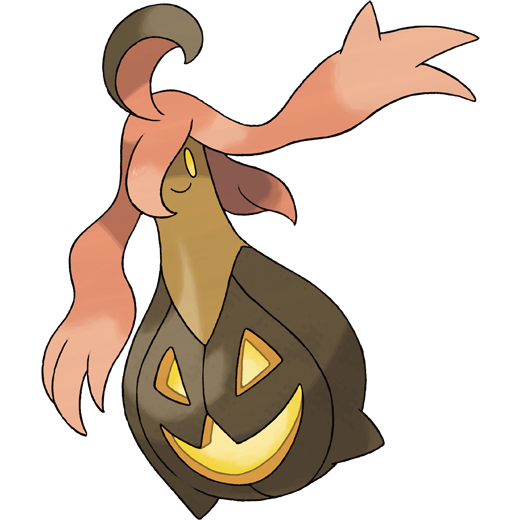
"Eerie cries emanate from its body in the dead of night. The sounds are said to be the wails of spirits who are suffering in the afterlife."
—Pokémon Sword
As Pumpkaboo becomes Gourgeist, its relationship with the afterlife changes dramatically.
Pumpkaboo carries wandering spirits toward the place where they belong.
Gourgeist does not always wait for someone to be wandering.
On nights without a moon, Gourgeist walks through towns singing an eerie song that curses those who hear it.
Small Gourgeist imitate children to lure adults.
Large Gourgeist present themselves as adults and lead children away.
Jumbo Gourgeist does not bother being selective at all.
It will forcefully drag anyone into the afterlife.
The relationship has changed.
Pumpkaboo says, “You are lost. Let me help you reach where you're going.”
Gourgeist increasingly becomes, “I have decided where you're going.”
That is an important emotional evolution because helpers can cross that same line without realizing it.
At first we offer advice.
Then we become invested in whether someone follows it.
Then their decision begins feeling like a reflection of whether they respect us.
Then we become frustrated because they keep making choices we wouldn't make.
Eventually, without intending to, helping becomes less about the person receiving support and more about our need to control the outcome.
The difference between guidance and control is often whether the other person is still allowed to say no.
Gourgeist used Explosion
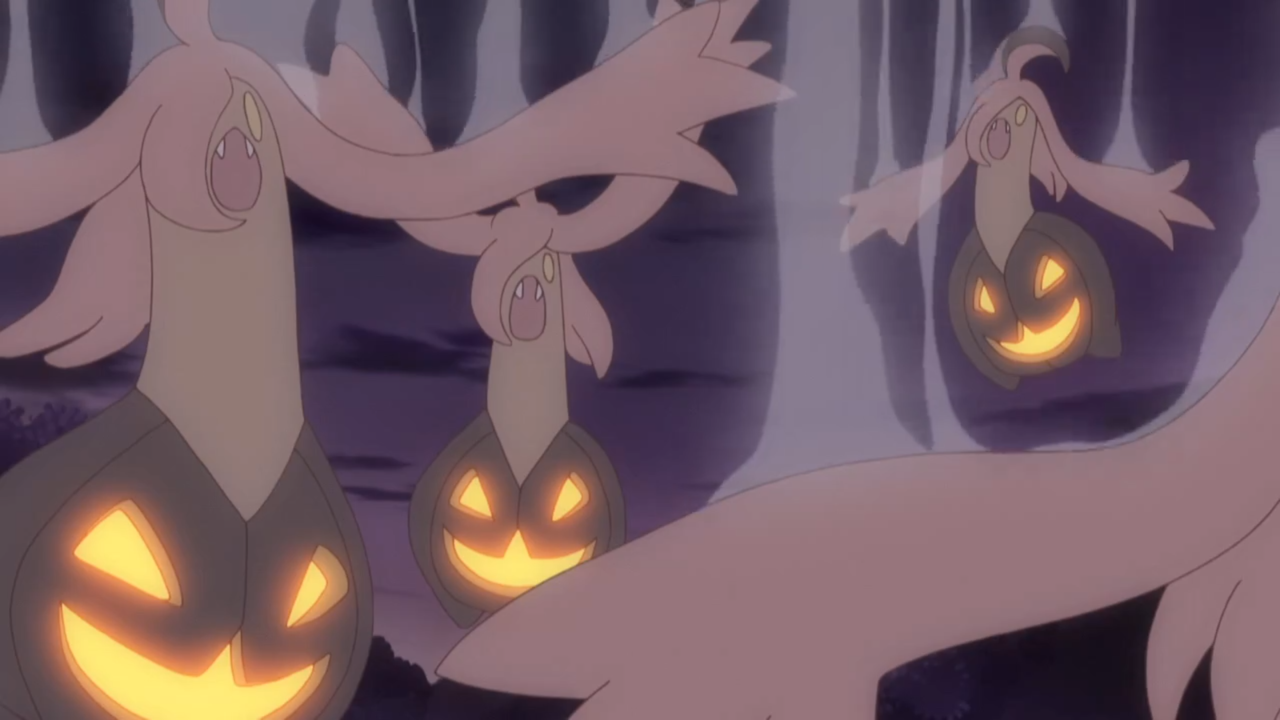
Pumpkaboo and Gourgeist comes in several different sizes, and those sizes are connected to the number of lost souls lingering where the Pokémon was formed.
Areas with fewer wandering spirits produce smaller Pumpkaboo.
Places where many souls remain can produce larger ones.
That creates another useful image.
What surrounds us can affect how much we carry.
Helping professions can gradually make us larger containers for other people's problems.
Friends can do the same.
Family can do the same.
Sometimes people recognize that we listen well.
They feel comfortable with us.
So they bring another problem.
Then another.
At one point in my life, I attracted people who always seemed to have another crisis.
Some needed genuine support.
Others began using the fact that I was willing to listen as an unlimited invitation to unload whatever they were carrying.
It took me time to understand the difference between being a supportive friend and becoming someone else's emotional dumping ground.
Protecting my peace became important.
That didn't mean ignoring people when they struggled.
It meant recognizing that compassion also needs boundaries.
I can say, “I'm sorry you're going through this” without saying “Give me all of it and I will carry it for you.”
Pumpkaboo can transport wandering spirits.
It doesn't have to become every spirit it carries.
Neither do we.
The forms of Gourgeist make its warning even clearer.
Small Gourgeist pretends to be a child because that disguise works on adults.
Large Gourgeist takes the appearance of an adult because children are more likely to follow.
The goal isn't helping someone understand.
It is influencing them in a way that produces a predetermined outcome.
Humans rarely do something that supernatural, but we understand the temptation.
We know which argument will make our friend feel guilty.
We know what our child is afraid of.
We know which emotional pressure might convince our partner.
We know how to phrase something so the other person feels they don't really have a choice.
Influence itself is not automatically wrong.
Every conversation influences us.
Good teachers influence students.
Friends influence one another.
Parents influence children.
Stories influence audiences.
The ethical question is what our influence leaves behind.
Does someone understand their options more clearly?
Or have we simply made it harder for them to disagree with us?
The best guidance increases someone's ability to choose.
Control reduces it.
Sometimes We Have to Let Someone Make the Mistake
This might be the hardest part.
Sometimes you have explained everything clearly.
They understand the risk.
They understand your concerns.
Yet they still choose differently.
That can hurt.
Especially when we love them.
But people often need ownership over their own mistakes in the same way they need ownership over their successes.
We can disagree.
Sometimes we should speak.
Sometimes strongly.
But eventually another person's life has to belong to them.
Otherwise we become Gourgeist, grabbing someone's hand because we're convinced we know where they belong.
Gourgeist used Trick-or-Treat
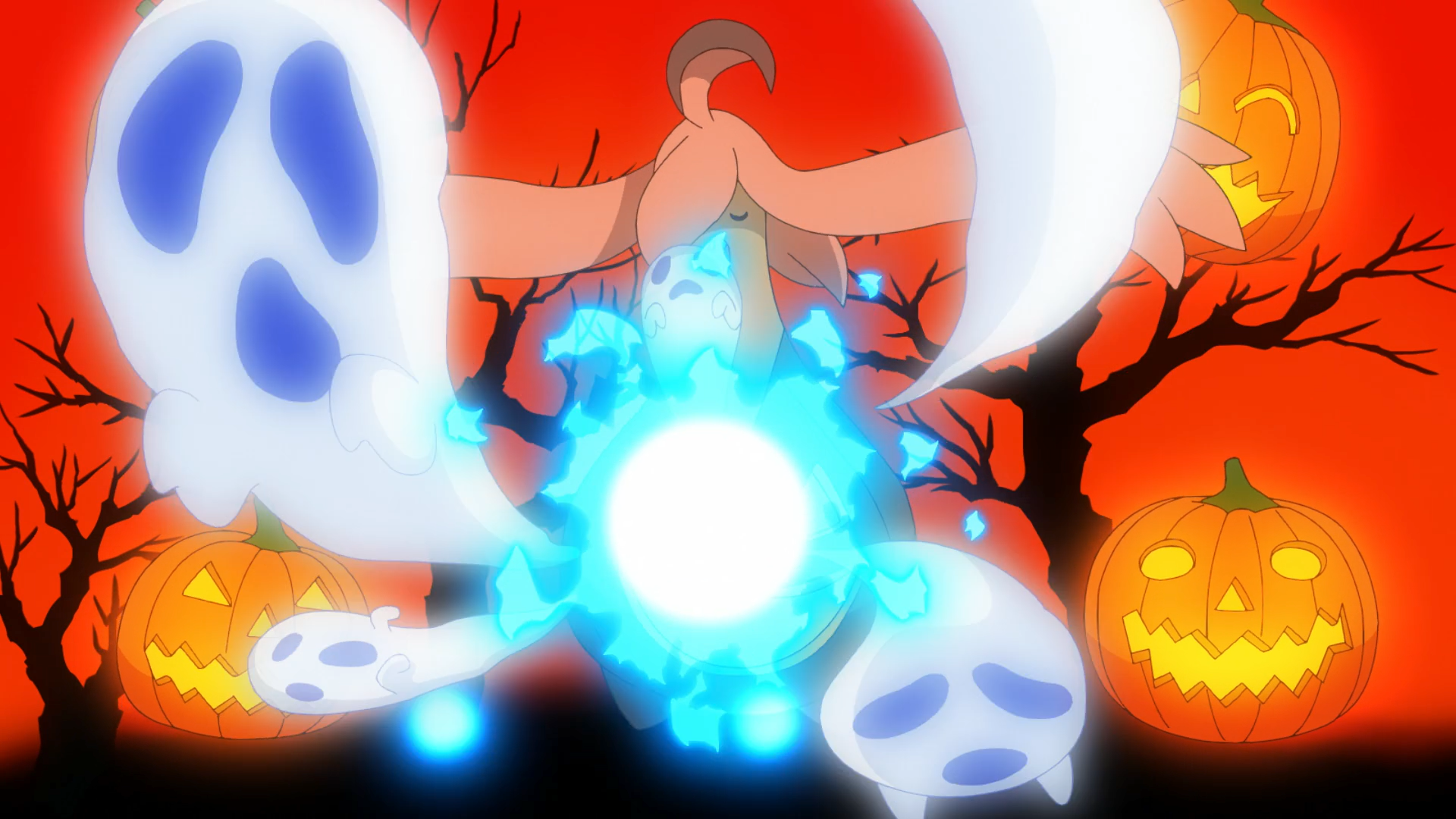
There is still one detail about Pumpkaboo that I keep returning to.
The spirit inhabiting Pumpkaboo is itself trapped in the material world.
Pumpkaboo is helping others move on while remaining somewhere in between.
Maybe that's what good guidance often looks like.
Not someone standing at the finish line shouting instructions backward.
Sometimes it is two people standing in uncertainty together, and one happens to have enough experience to see a little farther down the road.
We don't need to know everything.
We just need enough humility to remember that what worked for us may not work for them.
Enough awareness to recognize what they're carrying.
Enough compassion to care about where they end up.
Enough boundaries to understand that their life is not ours to control.
Enough light to help them see their options clearly.
Pumpkaboo shows us that illumination and control can come from the same place.
The difference is what we choose to do with the light.
Gourgeist warns us what can happen when helping becomes certainty, when we become so convinced that we know where someone belongs that we stop allowing them to choose for themselves.
Maybe the best guides aren't the people who always know the answer.
Maybe they're the people who know when an answer belongs to someone else.
The best guides provide enough light for someone to choose their own path.
Trunk or Treat at Madness Games & Comics: Bringing Pokémon to the People