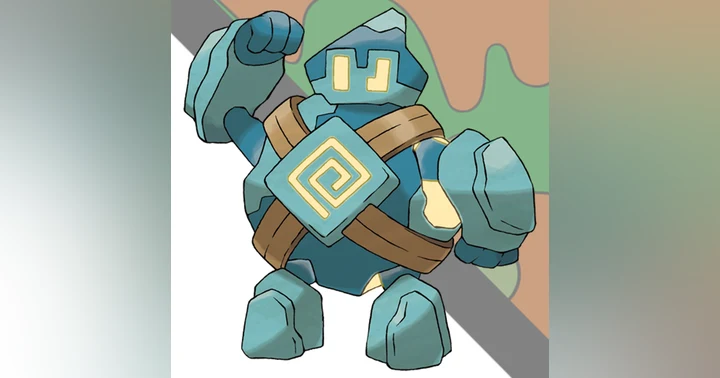
The Story of Shuppet

The sun has gone down over the city.
Most homes look ordinary from the street. Porch lights glowing, curtains are drawn, as people settle in for the evening.
But beneath the eaves of one particular house, several small Pokemon begin to gather.
It is Shuppet, hovering quietly beneath the roof, their pointed horns raised toward something no passerby can see.
According to its Pokédex entries, Shuppet is attracted to emotions like jealousy, vindictiveness, envy, malice, sadness, and hatred. It wanders through cities at night searching for those feelings, and when someone's desire for vengeance becomes especially strong, Shuppet may gather beneath that person's home.
There is even an old proverb, “Shun the house where Shuppet gather in the growing dusk.”
At first, that sounds like a warning about Shuppet. Maybe it isn't.
Perhaps Shuppet is simply the omen.
The real warning is what has been growing inside the house, which raises a much harder question.
What happens when we continue feeding feelings we have never resolved?
Shuppet

"Shuppet is attracted by feelings of jealousy and vindictiveness. If someone develops strong feelings of vengeance, this Pokémon will appear in a swarm and line up beneath the eaves of that person's home."
—Pokémon Ruby
Shuppet has an unusual relationship with negative emotion.
Its horn collects feelings such as anger, jealousy, resentment, and malice. Those emotions become nourishment, allowing Shuppet to gradually become stronger. Some people are even grateful for its presence because Shuppet removes those feelings from them. A Shuppet sleeping near someone may eat their dark emotions, leaving the person in a better mood by morning.
So negative emotions themselves are not presented as something unnatural.
People feel them and Shuppet finds them.
Anger can tell us that something feels wrong. Jealousy can reveal something we desperately want. Sadness can show us what mattered. Resentment may begin because somebody genuinely mistreated us.
There is nothing strange about feeling those things. The danger begins when we repeatedly give them more to eat. Each time, the anger gets another meal. The original event happened once but emotionally, we can make ourselves experience it dozens of times afterward.
That is where Shuppet becomes such an unsettling Pokémon. It doesn't have to create the resentment. It simply arrives when there is enough of it to feed on.
Shuppet used Spite
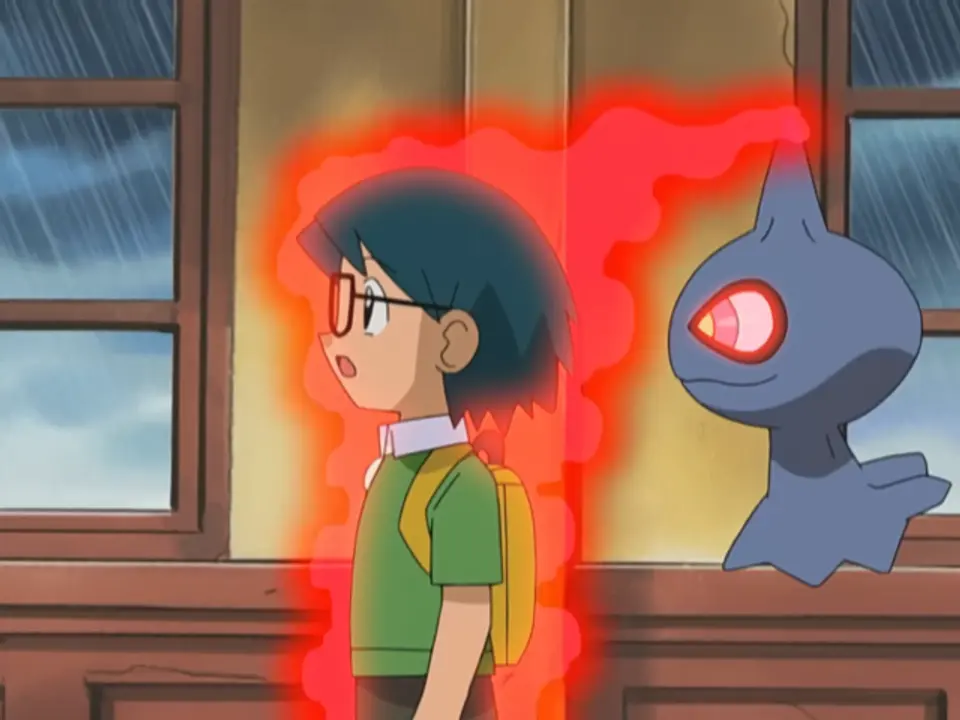
However, there is an important distinction to emphasize here. Sometimes the hurt is real. Telling someone to stop feeding resentment can sound like telling them they were wrong for being hurt. Those aren't the same thing.
I know that because I'm currently working through a wound of my own.
There was a period of my life when I was facing eviction and struggling with whether I even wanted to continue living.
During that time, someone I had worked alongside in the Pokémon GO community called me a scammer. This wasn't a stranger. I had helped with his events. I made flyers. I marketed their event. I provided wristbands for their events at no cost. We had worked alongside one another.
When members of the Pokémon community helped me financially during that season, he attempted to discourage that support. Even after I explained what was happening, he continued blaming me. He came into my Discord and told me the situation was my fault.
Eventually, he moved away and life continued. Then things started getting better and I got through that season. I eventually returned to full-time work. My housing became secure. My health started improving. The crisis that had once felt like my entire world became something I survived.
Then he returned to DFW.
There was never an apology. There was never an acknowledgment of what had happened. Instead, the expectation seemed to be that we could simply pretend we didn't know each other.
That bothered me more than I expected because part of me wanted acknowledgment. Part of me wanted him to understand how badly he had hurt me during one of the worst periods of my life. More importantly, another part of me wanted to prove something.
That he was wrong about me.
At one point, I saw him again. I reminded him, “I'm still here,” and I said it with a smirk.
There was satisfaction in that sentence because I was still here. I had survived. The things that had been said about me hadn't become true. But eventually I began noticing how much mental energy I was spending on proving that to someone who was no longer worth that much space in my mind.
That insight matters because resentment can change shape.
At first, "I want you to understand what you did" becomes "I want you to admit you were wrong" which then becomes "I want you to see how well I'm doing."
If we're not careful, even success can become another way of feeding the same wound. Without realizing it, we can build a better life while still allowing someone from our past to remain the imaginary audience for it.
At some point, I had to confront a different question, "what if my life doesn't need to prove anything to him?"
My life is better now and that's all that matters.
Shuppet used Screech

One of Shuppet's abilities is Insomnia, which prevents it from falling asleep. Emotionally, that feels appropriate for a Pokémon drawn toward unresolved feelings.
Some wounds are exhausting precisely because our minds refuse to put them down. We replay conversations, imagine confrontations, rewrite endings, try to create the perfect sentence that would finally make someone understand.
Sometimes we aren't even speaking to the other person anymore. The argument continues entirely inside us. I have experienced that. I have imagined conversations that never happened. I have thought about what I would say if the subject came up again. I have wanted acknowledgment that may never arrive.
All of that requires energy.
Energy that could be going somewhere else. Healing doesn't necessarily mean we never think about what happened again. Sometimes it means the memory no longer gets to wake us up every time it knocks.
Shuppet can also have Frisk, an ability that reveals what an opponent is holding. Shuppet's biology already revolves around detecting things people carry internally. Feelings like jealousy, sadness, hatred, and resentment.
Those emotions are not always visible from the outside. Neither are the experiences beneath them.
A rejection today can accidentally wake up a rejection from years ago. A criticism at work can sound like the voice of someone who criticized us long before we got there. A friend needing space can feel like abandonment if abandonment is something we already fear.
Unresolved wounds have a way of connecting experiences that aren't necessarily connected.
Frisk offers a useful reminder that people carry things we cannot immediately see.
Sometimes understanding our reaction means looking at what we were already carrying before the new situation happened.
Shuppet's Hidden Ability, Cursed Body, can disable a move after Shuppet is struck by it.
Emotionally, that can represent defenses unresolved pain often creates.
Someone betrays your trust, so you become more suspicious. Someone embarrasses you publicly, so you become hesitant to speak. Someone abandons you, so you learn not to depend on people. Someone takes advantage of your generosity, so the next person has to work much harder before you'll help them.
The defense usually comes from somewhere real. It protected us once. The question is whether it still belongs in every situation.
My own experience forced me to think more carefully about boundaries.
Not everyone deserves the same access to me.
Forgiveness, healing, or moving forward does not require returning to the exact relationship that existed before the hurt.
Sometimes maturity means realizing that I can stop feeding the resentment without reopening the door.
Those are different decisions.
But if we, like Shuppet, keep feeding on resentment long enough, there may come a point when it is no longer simply consuming someone else’s grudge.
It begins carrying one of its own.
Banette

"Strong feelings of hatred turned a puppet into a Pokémon. If it opens its mouth, its cursed energy escapes."
—Pokémon FireRed & LeafGreen
Shuppet evolves into Banette starting at level 37 and emotionally, something significant changes.
Shuppet feeds on resentment that already exists around it. Banette carries resentment of its own.
Banette is described as a discarded stuffed doll brought to life by an overwhelming grudge. It wanders garbage dumps and dark alleys searching for the person who threw it away.
The progression almost feels like a warning.
Shuppet is "I consume resentment" while Banette is "resentment has become part of me."
Banette has a reason to be hurt. It was abandoned. Something that once belonged to someone, something presumably meant to be held, played with, and cared for, was discarded.
The pain isn't imaginary because unresolved resentment is often connected to something real.
Someone betrayed us. Someone humiliated us. Someone disappeared. Someone failed us when we needed them. Someone never apologized.
The problem isn't that the hurt happened. The danger is when the hurt becomes the center around which everything else begins orbiting.
Banette doesn't simply remember being discarded. It searches for the person responsible. Its life becomes organized around the wound.
Furthermore, Banette's mouth is a zipper.
Its life force and cursed energy are contained within its body, and opening its mouth would allow that energy to escape.
It is difficult not to see emotional meaning there.
We sometimes pride ourselves on keeping everything contained. We keep going by working, laughing, making plans, telling ourselves we're fine.
But silence and healing are not necessarily the same thing.
In my spare time, I journal my thoughts.
That has become one of the ways I discover feelings I didn't realize I was still carrying. Sometimes writing something down reveals that an emotion I thought I had moved past is still very much alive. When the person involved returned to DFW, feelings that had been easier to ignore while he lived in Chicago suddenly became harder to avoid.
That wasn't necessarily a setback. It forced me to confront them.
Sometimes distance lets us put the zipper back up. Healing requires asking what is still behind it.
Part of what makes this important to me is that I have seen what long-term resentment can become.
My mother could be a bitter woman. She held grudges and I saw how unresolved wounds could survive far longer than the events that created them.
Years can pass, then decades, and something that happened twenty or thirty years ago can still influence how someone speaks, reacts, trusts, loves, and remembers.
I don't want that for myself.
That doesn't mean forcing myself to forgive before I'm ready.
I'm not at the point where I can say I wish the person who hurt me the best.
Maybe I will get there. Maybe healing will look different.
Right now, it looks more like this,
The pain still hurts. Sometimes I still cry about it. Sometimes I need to talk through it. Sometimes I need to write.
But I'm allowing myself to feel those things instead of pretending they aren't there.
And slowly, I am trying to define my story without him in it.
That may be one of the most important differences between feeling resentment and feeding it.
Feeling says, this still hurts.
Feeding says, "I need to keep returning to the person who hurt me in order to understand who I am now."
I'm trying to let go of the second one.
Banette used Role Play
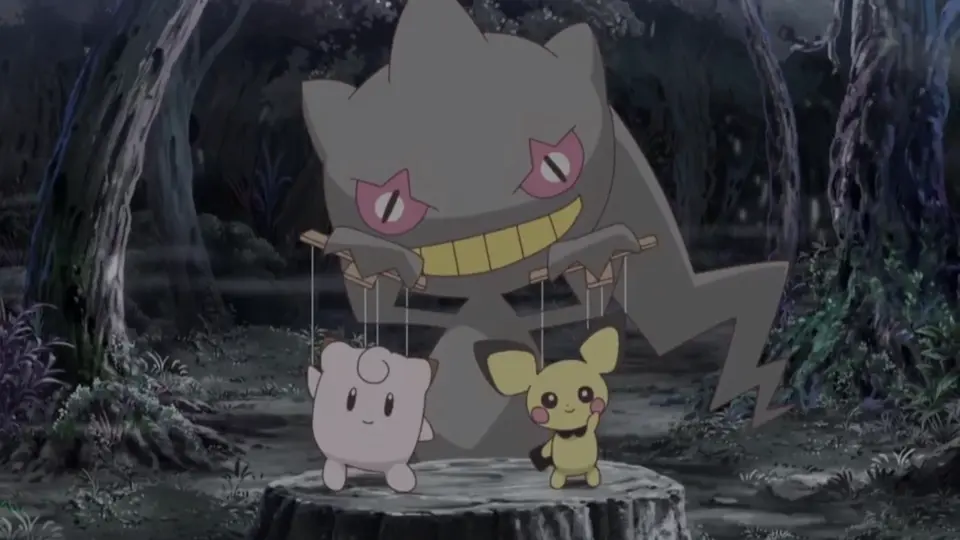
There is a detail about Banette that changes the entire tone of its story.
According to the Sleep Style Dex, Banette sometimes laughs happily while sleeping.
It is believed that during those moments, Banette is remembering a time when it was loved and cared for.
That might be one of the saddest and most hopeful details about this Pokémon.
Beneath the grudge, another memory still exists. Banette remembers being discarded. However, somewhere inside, it also remembers belonging.
Pain has a way of convincing us that the worst chapter explains the whole book. But it's important to remember that we existed before some of the things that hurt us and we continue existing afterward.
I was more than the person facing eviction. I was more than the accusations made against me. And now I have new chapters that have nothing to do with those moments.
I work full time. My housing is secure. My health is improving. I share my life with someone I love. I still create. I still participate in the Pokémon community.
I'm still here.
Those things don't erase what happened. They simply prove that what happened does not get to define everything that came afterward.
Banette remembering love does not erase its abandonment. It reminds us that abandonment was never its only experience.
Mega Banette

"Extraordinary energy amplifies its cursing power to such an extent that it can't help but curse its own Trainer."
—Pokémon Ultra Sun
Banette can Mega Evolve.
However, Mega Evolution does not heal it.
Instead, Mega Banette gains several additional zippers. Some are opened, revealing the cursed energy inside its body. According to Pokemon Ultra Sun, "its power and vindictiveness increase so dramatically that it can even curse its own Trainer."
That is where Shuppet's warning reaches its most dangerous point.
The resentment has gone from something nearby, to something carried, to something spilling outward.
Mega Banette represents what can happen when unresolved pain begins affecting people who did not cause it.
Maybe someone is betrayed in one relationship and becomes controlling in the next.
Maybe someone who felt ignored begins demanding constant reassurance from people who genuinely care about them.
Maybe a parent carries wounds from their own childhood and unknowingly passes them into another generation.
The original hurt may explain the behavior. It doesn't automatically excuse what the behavior does to someone else. That is an uncomfortable distinction.
If we aren't careful, unresolved feelings can make innocent people answer for something they never did.
That may be Mega Banette's warning.
Mega Evolution gives Banette more power, but more power does not create peace. It amplifies what Banette was already carrying. That lesson extends beyond anger.
A relationship won't automatically heal loneliness. Leadership won't automatically heal the need to be respected. An audience won't automatically heal the fear that we don't matter.
Sometimes gaining more simply gives an unresolved wound more places to express itself.
Eventually, the healing has to happen somewhere else.
Bannete used Hex
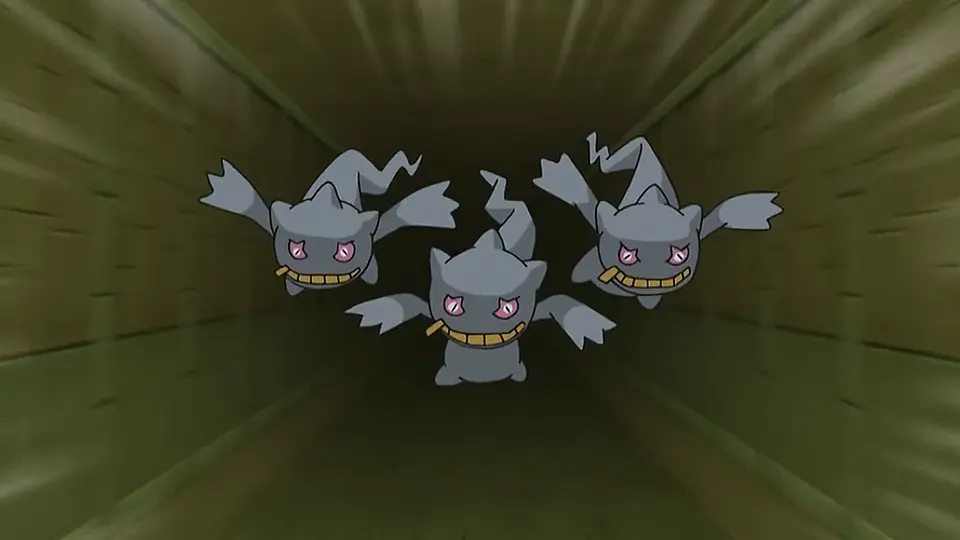
Shuppet teaches us that the emotions we continually feed can grow stronger the more attention we give them. Banette teaches us that when a wound remains unresolved long enough, it can stop being something that happened to us and start becoming part of how we see ourselves. Mega Banette teaches us that what we refuse to address can eventually spill outward, affecting people and situations that had nothing to do with the original hurt.
None of that means anger is wrong. Healing does not require pretending otherwise.
Even Banette, beneath all of its anger, still remembers what it felt like to be cared for. The wound may be part of its story, but it was never the whole story.
Maybe resolving our own feelings begins there.
We can acknowledge what happened. We can give ourselves time to grieve, cry, journal, talk, and set boundaries. We can admit that something still hurts without continuing to organize our lives around the person who caused it.
Eventually, the question becomes less about whether our anger is justified and more about whether we still want to keep feeding it.
Shuppet warns us what those emotions can become. Banette shows us what happens when we carry them too long. Mega Banette reminds us why healing matters before our wounds begin writing themselves into other parts of our lives.
What hurt us can remain part of our story without becoming the thing that writes the rest of it.
Choose Your Next Safari Ball Adventure
Golett | Drifloon | Bramblin
🎧 Want the human side of Pokémon?
🎙️ As The Pokeball Turns explores the Trainers.
Listen to real stories about:
- Community leaders
- Collectors
- Creators
- Everyday fans
The Story of Growlithe