The Story of Heracross
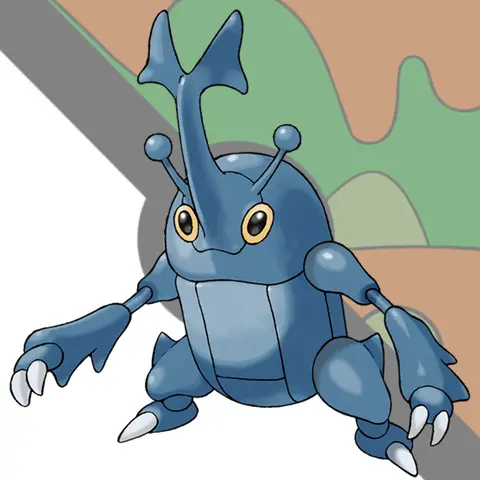
Deep within a forest in the Johto region, a blue Pokémon slowly climbs the trunk of a large tree.
Its sharp claws dig into the bark, securing its footing as it makes its way toward a patch of sweet sap. Two short antennae move gently above its head, picking up the familiar scent that led it here.
This is Heracross, a Pokémon known for its extraordinary physical strength.
Its navy-blue exoskeleton is nearly as hard as steel, while a large horn extends from its forehead. With enough power to lift objects 100 times its own body weight, Heracross can throw opponents much larger than itself.
Yet there is something surprisingly peaceful about watching it search for food.
Heracross isn't constantly looking for a fight. Much of its time is spent wandering through forests, searching for sweet sap and nectar. It follows scents with its antennae, climbs trees using its powerful claws, and settles down to enjoy whatever it finds.
For a Pokémon capable of tremendous physical feats, its daily desires appear remarkably simple.
Of course, that doesn't mean Heracross is unwilling to defend itself.
When another Pokémon interrupts its meal, Heracross can use its prized horn to drive the intruder away. It has been known to compete with Pinsir over food and even hurl rivals across considerable distances.
Its gentle nature doesn't prevent it from being powerful.
Its power doesn't require it to be aggressive all the time.
That contrast introduces an interesting question.
When someone possesses extraordinary strength, does that strength have to become the defining feature of their life?
Or can they simply enjoy what matters to them without constantly proving what they're capable of?
Heracross's relationship with strength becomes especially meaningful when we consider what happens during Mega Evolution.
While its ordinary form can lift an incredible amount of weight, Mega Heracross becomes capable of carrying even more.
But that additional strength comes with a cost that isn't immediately visible.
Heracross
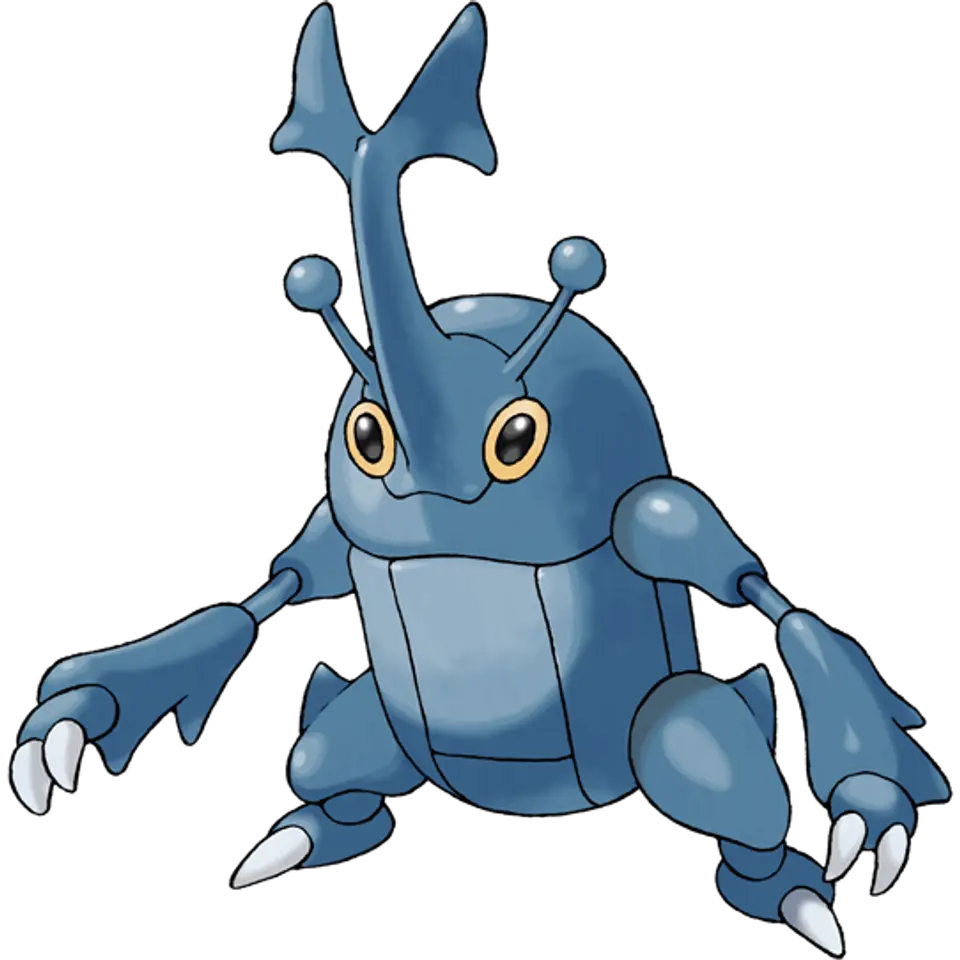
"With its Herculean powers, it can easily throw around an object that is 100 times its own weight."
-Pokemon Crystal
Heracross is one of the physically strongest Bug-type Pokémon, yet its behavior doesn't always reflect the aggressive appearance of its horn.
Its Silver Pokédex entry describes it as "Usually docile, but if disturbed while sipping honey, it chases off the intruder with its horn."
Heracross doesn't appear to use its extraordinary strength simply because it possesses it. Its most notable displays of power are often connected to defending itself, competing for food, or protecting access to something it needs.
Its horn is an essential part of that strength.
According to its Ruby Pokédex entry, "Heracross charges in a straight line at its foe, slips beneath the foe's grasp, and then scoops up and hurls the opponent with its mighty horn. This Pokémon even has enough power to topple a massive tree."
Its Sapphire entry adds another detail, "Heracross has sharp claws on its feet. These are planted firmly into the ground or the bark of a tree, giving the Pokémon a secure and solid footing to forcefully fling away foes with its proud horn."
The strength of its horn is impressive, but its ability to use that strength depends partly on having a stable foundation.
Without secure footing, lifting something much heavier than itself would be considerably more difficult.
This offers an interesting way to understand human strength.
We often recognize someone's capabilities through what they accomplish. We notice the person who works long hours, handles difficult assignments, or consistently helps others.
But we don't always consider what allows them to maintain that level of performance.
Perhaps they have a supportive family, a predictable schedule, reliable transportation, or enough time to recover after a demanding day.
Those foundations matter because just as Heracross relies on its claws to anchor itself before using its horn, people often depend on circumstances and resources that make their abilities sustainable.
Being strong doesn't mean operating without support and having the ability to accomplish something doesn't necessarily mean we should be expected to do it constantly.
That's a distinction I didn't always understand.
Growing up, I developed a habit of overcompensating because I wanted people to like me.
In high school, I sometimes allowed classmates to copy my answers. At the time, I believed being helpful might make people appreciate me.
Looking back, I recognize that some people were taking advantage of my willingness to help.
I was confusing being useful with being valued.
That distinction becomes meaningful when we return to Heracross.
Its strength is a natural part of its biology, but that strength doesn't define every interaction it has with the world.
Heracross can lift enormous objects and throw powerful opponents. Yet it spends much of its time doing something it enjoys: searching for sweet sap.
It doesn't need to demonstrate its strength at every opportunity.
Perhaps that's something we can learn from it.
Having something valuable to offer doesn't mean we must constantly give it away to prove our worth.
Heracross used Sword Dance
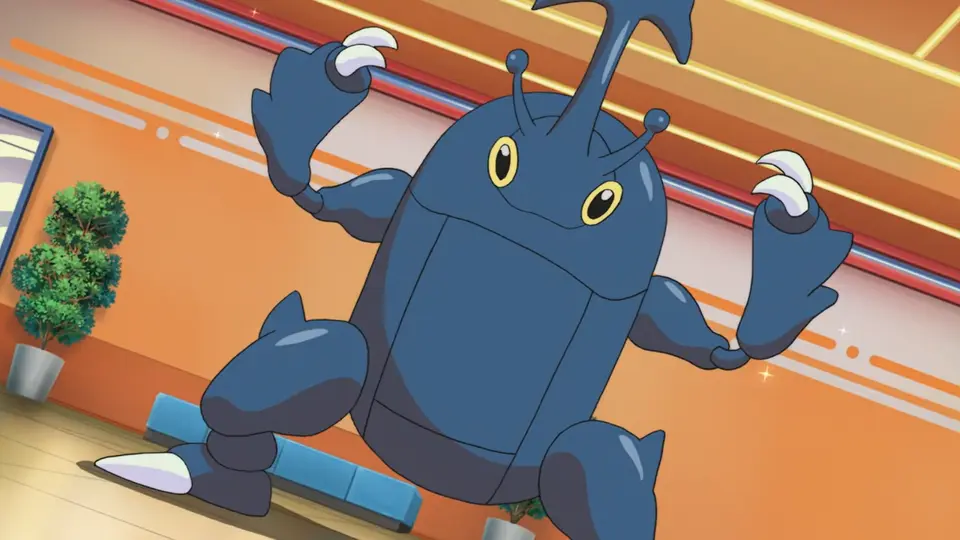
Heracross's interactions with other Pokémon reveal how its strength operates in different circumstances.
When food becomes contested, Heracross is willing to fight for it.
Its Platinum Pokédex entry reinforces this behavior, explaining "It loves sweet honey. To keep all the honey to itself, it hurls rivals away with its prized horn."
This might initially seem inconsistent with its generally gentle nature but being peaceful doesn't mean never competing.
Heracross needs food, and competition can arise when other Pokémon seek the same resources.
Its willingness to defend access to those resources doesn't mean it spends every moment searching for conflict.
Rather than competing endlessly for every available resource, Heracross can coexist with another Pokémon while feeding.
For humans, that distinction can be difficult.
Some people become so accustomed to helping others that they struggle to recognize when their own needs deserve attention.
I remember experiencing this when I wanted to become a chef.
I was eager to learn how to cook, so I initially volunteered to wash dishes.
It seemed like a reasonable place to begin. I wanted to contribute, gain experience, and eventually learn more about preparing food.
But as time passed, washing dishes became what people expected from me.
When I wanted opportunities to start cooking, I was still directed toward the dishes.
I remember feeling sad because I genuinely wanted to learn.
The responsibility I had willingly accepted was now limiting my opportunity to pursue the very goal that brought me there.
Heracross's behavior around food provides a way to understand why that experience mattered.
Heracross is capable of sharing access to food, but it can also defend its own place at a tree when competitors threaten to take what it needs.
Those behaviors aren't necessarily contradictory.
They reflect different circumstances.
Likewise, helping others and protecting our own opportunities don't have to be opposing choices.
Someone can volunteer to assist with a project while still expressing interest in developing new skills. An employee can help a coworker without accepting responsibility for every unfinished assignment. A friend can offer support without making themselves available at every hour.
The challenge is recognizing when being helpful begins preventing us from pursuing something important to ourselves.
Heracross's relationship with Pinsir becomes even more interesting in Alola.
There, the two Pokémon reportedly get along better because both have rivalries with Vikavolt.
Although they compete for resources in other circumstances, their shared conflict with another Pokémon changes their relationship.
The Pokédex doesn't explain whether they form lasting friendships or deliberately cooperate. Still, it shows that the relationship between two competitors isn't necessarily the same in every environment.
Circumstances can change how Pokémon interact.
For Heracross, strength can support competition, defense, and coexistence.
It doesn't have to serve the same purpose in every encounter.
For us, perhaps the lesson is that being a kind person doesn't require responding to every situation with unlimited generosity.
Sometimes helping is appropriate.
Sometimes protecting our opportunities matters.
Then sometimes strength is simply knowing that we have nothing to prove.
Heracross used Endure
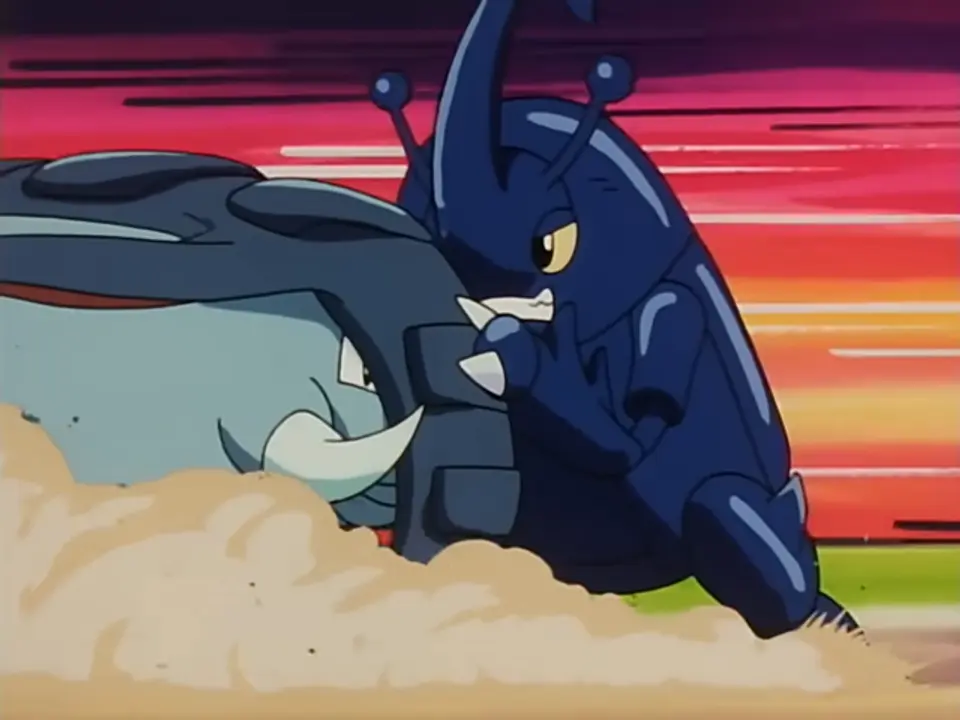
Heracross's abilities offer another perspective on how strength can emerge under different conditions.
Its three abilities Swarm, Guts, and Moxie each increase its offensive capabilities, but they do so in different circumstances.
Swarm increases the power of Bug-type moves when Heracross's HP becomes low.
The ability allows Heracross to become more dangerous even as its remaining health decreases.
Emotionally, this might remind us of the determination that sometimes appears when we're running out of options.
A student struggling to complete an assignment before a deadline might suddenly become intensely focused. Someone facing an unexpected challenge may discover the motivation to push through a difficult moment.
But there's an important distinction between finding strength during an emergency and living as though every day must be an emergency.
Heracross's Swarm gives it a battle advantage under specific conditions. It doesn't mean that having low HP is always desirable.
Similarly, our ability to perform under pressure doesn't mean constant pressure is good for us.
Guts boosts Heracross's Attack when it is affected by a status condition.
A burn, paralysis, or another qualifying condition can activate the ability, increasing its offensive strength even while the condition creates difficulties.
This provides an interesting contrast.
Heracross may become more powerful offensively while still experiencing the negative effects of its status condition.
Its increased strength doesn't make the problem disappear.
People sometimes experience something similar when working through difficult circumstances.
A person might continue meeting responsibilities while feeling exhausted. Someone dealing with personal challenges may still perform exceptionally well at work.
Their accomplishments are real.
But those accomplishments don't prove that the underlying difficulties aren't affecting them.
Guts reminds us that strength and struggle can exist at the same time.
Moxie increases Heracross's Attack after it knocks out another Pokémon.
Unlike Swarm and Guts, which activate under difficult conditions, Moxie rewards success by making Heracross more powerful.
This could represent the confidence people develop after accomplishing something challenging.
Someone who successfully organizes their first community event might feel encouraged to plan another. A person learning to cook may gain confidence after preparing a meal they're proud of.
Success can make future challenges feel more approachable.
But Moxie also raises an interesting question.
What happens when each accomplishment encourages us to take on something even larger?
Confidence is valuable, but it can sometimes lead us to underestimate the effort required by the next challenge.
Together, Heracross's abilities reveal three different relationships with strength.
Swarm reflects power emerging when resources are low. Guts shows how offensive strength can coexist with difficult conditions. Moxie demonstrates how success can create momentum.
None of these abilities automatically means that Heracross is unaffected by the circumstances activating them.
However, being capable of performing well under difficult conditions doesn't necessarily mean those conditions aren't taking a toll.
Heracross can be extraordinarily powerful while still experiencing limitations.
When Heracross undergoes Mega Evolution, this distinction becomes even more important because its next form doesn't merely gain a little more power.
Its physical capabilities increase dramatically, and the consequences of using that strength become much harder to ignore.
Mega Heracross
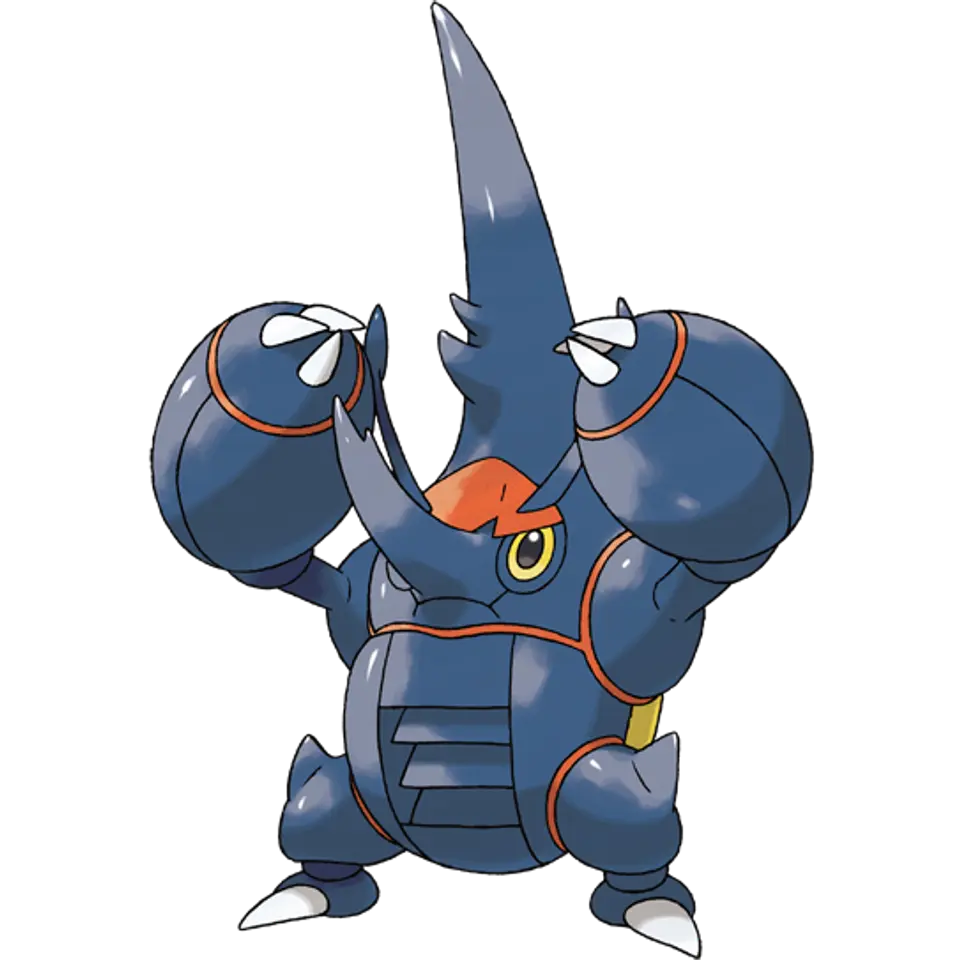
"A tremendous influx of energy builds it up, but when Mega Evolution ends, Heracross is bothered by terrible soreness in its muscles."
-Ultra Moon
A sudden surge of energy transforms Heracross's body.
Its blue exoskeleton becomes bulkier, with thickened forearms and a larger, more imposing horn extending from its head.
The shape of its body changes dramatically.
Orange markings appear across its armor, its antennae lengthen, and its back loses the wings found in its ordinary form.
The once relatively simple appearance of Heracross becomes something resembling a heavily armored powerhouse.
Its physical strength has increased enormously.
Where ordinary Heracross can lift objects 100 times its body weight, Mega Heracross can lift objects weighing 500 times its body weight between its horns.
Its strength is tremendous enough to lift a fighter plane.
Yet this transformation involves more than simply developing larger muscles.
Mega Heracross's body also adapts to accommodate its new offensive capabilities.
During certain multistrike attacks, the protective shells covering its arms open, revealing segmented structures beneath them.
These openings allow air to move through its forearms while its claws retract, enabling it to rapidly launch projectiles such as seeds, spikes, and rocks.
Its increased body temperature also requires it to open portions of its armor to release excess heat.
Even with these adaptations, Mega Heracross experiences a significant physical consequence.
Its Ultra Moon Pokédex entry reveals that the tremendous energy of Mega Evolution leaves Heracross suffering from terrible muscle soreness after returning to its ordinary form.
During Mega Evolution, Heracross can accomplish physical feats far beyond its normal capabilities.
But when the transformation ends, its body must deal with the aftermath.
Its increased strength doesn't eliminate the cost of using that strength.
That's where Mega Heracross offers one of the most meaningful lessons of its evolutionary journey.
From the outside, that transformation looks like an extraordinary improvement.
Its muscles are more powerful, its offensive capabilities expand, and its body develops new ways to deliver attacks.
But the soreness it experiences afterward reveals something that isn't immediately obvious while it's performing those feats.
Being capable of carrying additional weight doesn't mean the weight has stopped affecting it.
I remember experiencing something similar while working in retail.
After the employee responsible for closing shifts was fired, I was expected to cover those shifts.
I didn't have a car at the time, and public transportation stopped running before I could use it to get home.
That meant walking approximately three miles after finishing work.
Five nights a week, I would make that journey.
Some evenings were cold. Others brought rain. There were stretches without sidewalks, requiring me to navigate between the grass and the road.
I was already tired from working, yet getting home demanded another considerable amount of physical effort.
But because I kept doing it, the responsibility continued.
I was capable of working those shifts.
I was capable of walking home afterward.
But that didn't mean the experience was easy or that the physical demands weren't affecting me.
Looking back, I recognize how my willingness to accommodate others had become part of a larger pattern.
I wanted to be dependable. I wanted to help. For a long time, I associated being useful with being accepted.
Yet there were moments when my willingness to take on more came at the expense of what I needed.
Mega Heracross provides a useful way to understand that distinction.
During Mega Evolution, its body is capable of extraordinary performance.
But once the transformation ends, the soreness remains.
The physical accomplishment doesn't erase the consequences.
Similarly, someone may successfully complete a demanding shift, organize an event, or take on additional responsibilities while still experiencing exhaustion afterward.
Their ability to accomplish the task doesn't necessarily mean the expectation was reasonable.
Repeated success doesn't guarantee that the responsibility will remain sustainable.
Sometimes the strongest person in the room is still carrying more than anyone realizes.
Heracross used Fury Attack
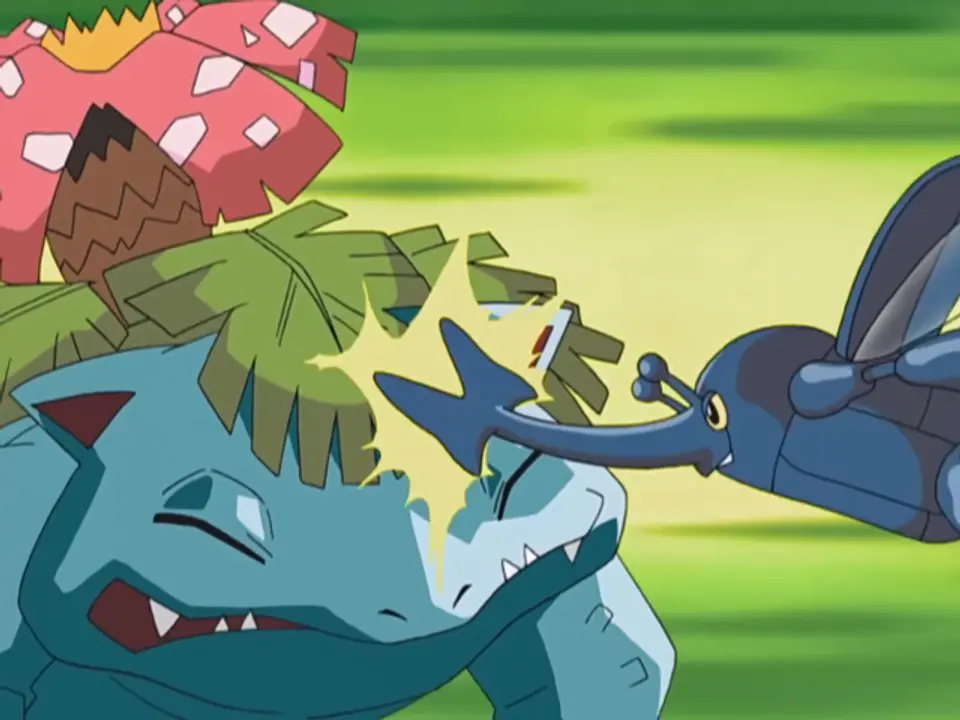
Mega Heracross's Ability, Skill Link, provides another example of its expanded offensive potential.
Skill Link maximizes the number of hits delivered by multistrike moves.
Combined with Mega Heracross's physical changes, this allows it to make full use of attacks that launch repeated projectiles.
Its arms have developed structures that support rapid-fire attacks, while its ability ensures those multistrike moves reach their maximum number of hits.
This creates a different relationship with strength than Heracross's ordinary form.
Normal Heracross uses its horn and secure footing to overpower opponents through direct physical force.
Mega Heracross retains tremendous physical strength while gaining a more specialized way to deliver repeated attacks.
It can accomplish more, and its body has changed to support that increased performance.
But these adaptations haven't removed its need to release excess heat or recover from the transformation.
In fact, its biology makes those limitations especially visible.
Mega Heracross must open portions of its armor to regulate its temperature.
The same powerful body that can lift enormous weight also requires mechanisms to prevent excessive heat buildup.
There's an important emotional distinction here.
Developing a skill doesn't mean every related responsibility becomes effortless.
Imagine someone who becomes exceptionally good at organizing community events.
Their first event requires weeks of preparation. Over time, they learn how to coordinate volunteers, manage supplies, and communicate with participants.
Eventually, organizing events becomes easier because they've developed experience.
But that doesn't mean planning five events at once requires no additional effort.
Their skills have improved, yet their available time and energy remain limited.
Mega Heracross reflects a similar limitation.
Its transformed body supports greater physical output, but the additional power still has consequences.
This doesn't make its transformation a failure.
It simply means growth and limitations can exist together.
Heracross used Megahorn
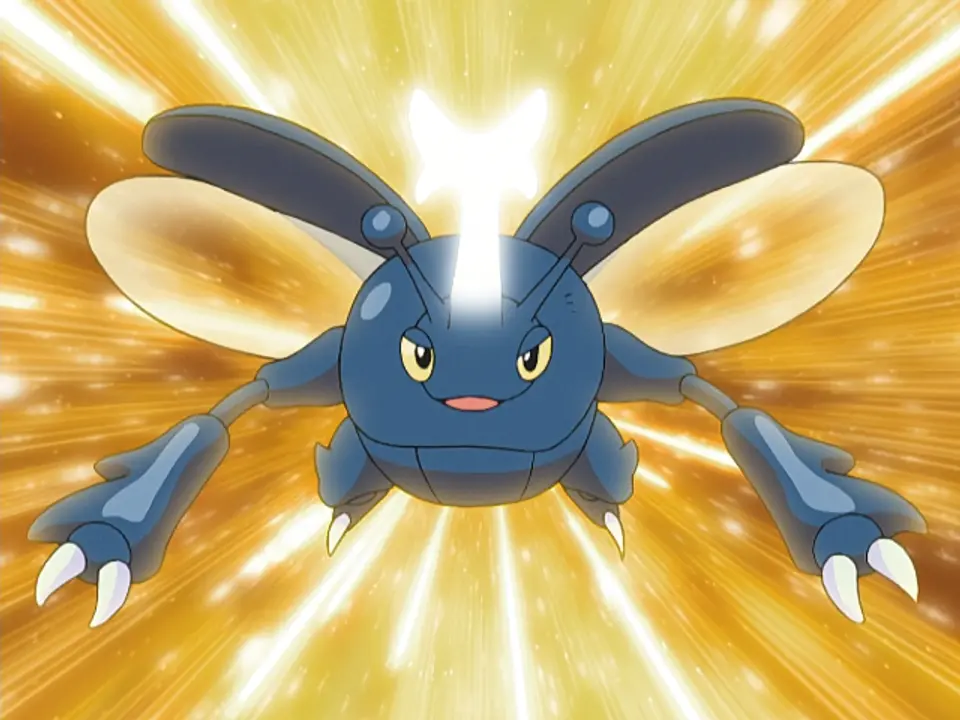
Heracross's journey offers an important perspective on the relationship between strength, gentleness, and responsibility.
Its ordinary form demonstrates extraordinary physical power, yet much of its life revolves around searching for food and navigating its forest environment.
It uses its horn to defend itself, its claws to establish secure footing, and its antennae to locate the sweet sap it enjoys.
Its relationships with other Pokémon reveal that strength can support competition and coexistence without requiring constant aggression.
Its abilities demonstrate how power can emerge under pressure, through perseverance, and after success.
But none of those characteristics removes its need for rest.
Even Heracross can become exhausted after a difficult search for food.
Mega Heracross expands that lesson.
Its body becomes capable of lifting 500 times its own weight and delivering rapid multistrike attacks, yet the transformation leaves it suffering from significant muscle soreness.
The additional power is real.
So is the cost.
Together, Heracross and Mega Heracross remind us that our capabilities don't determine how much we should be expected to carry.
We may be excellent at helping others, solving problems, completing difficult assignments, or remaining dependable when circumstances become challenging.
But that doesn't mean we have unlimited time, energy, or emotional capacity.
And it doesn't mean our own ambitions should always come second.
When I think about the times I tried to earn acceptance by being helpful, I recognize that I often focused more on what others needed from me than on what I wanted for myself.
I wanted people to like me.
I wanted to contribute.
I wanted to prove I could be counted on.
But I also wanted opportunities to learn, grow, and enjoy the things that mattered to me.
Those desires weren't incompatible.
I simply hadn't learned that helping others didn't require continuously placing my own needs aside.
Heracross's gentle strength offers a reminder that being powerful doesn't mean we must constantly demonstrate it.
And Mega Heracross reminds us that even extraordinary performance can leave us carrying consequences long after the moment has passed.
Sometimes being strong means helping someone else.
Sometimes it means standing our ground.
And sometimes it means recognizing that we've already carried enough.
Being strong enough to carry something doesn't mean the weight isn't affecting us. And knowing when to put it down doesn't make us any less strong.
Choose Your Next Safari Ball Adventure
Dwebble | Machop | Spinarak
🎧 Want the human side of Pokémon?
🎙️ As The Pokeball Turns explores the Trainers.
Listen to real stories about:
- Community leaders
- Collectors
- Creators
- Everyday fans

November Community Day: Giving Back Through Pokémon GO